
Categories
HomeownershipPublished August 28, 2026
250 Apartments Filed for Overtown Near Culmer Metrorail

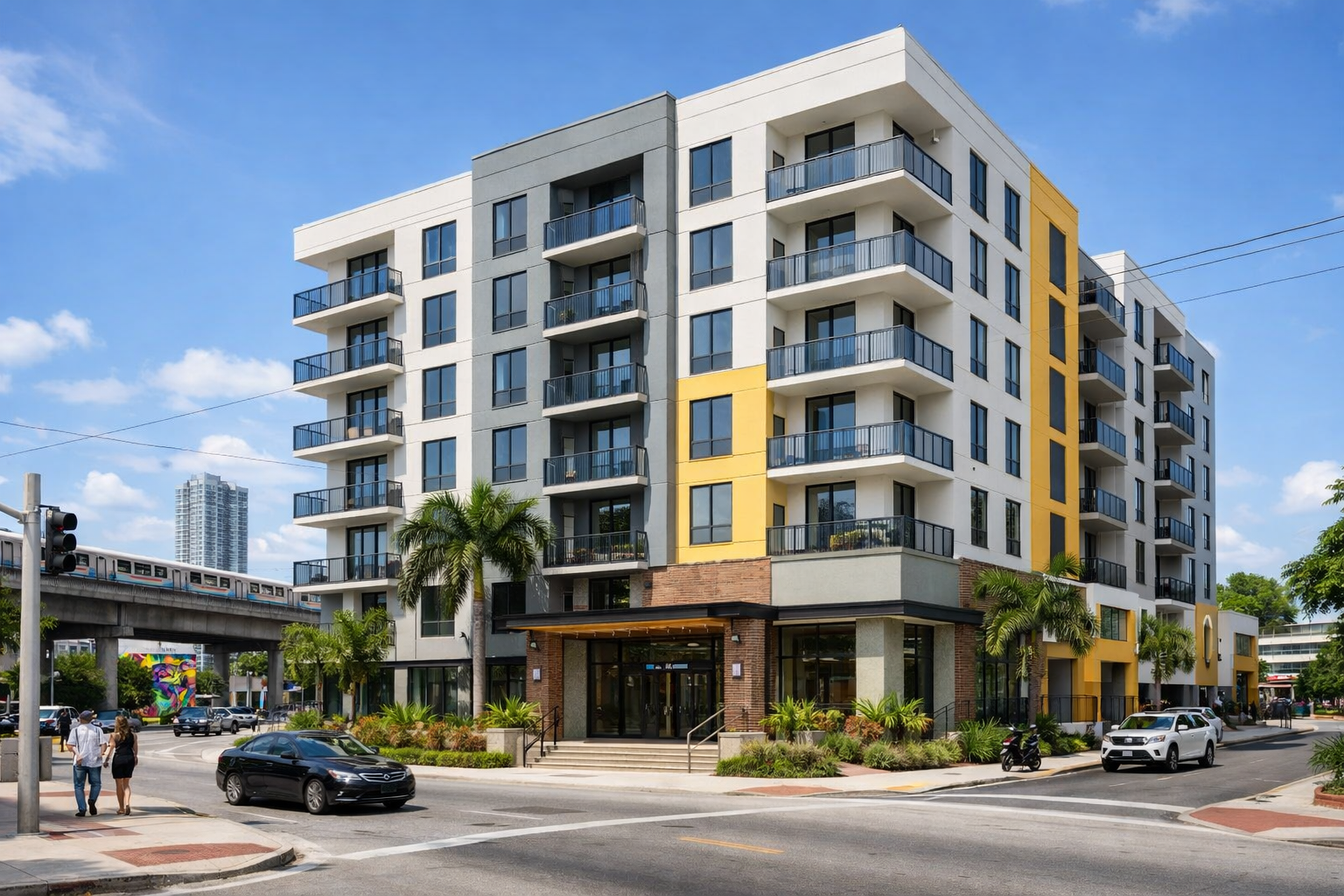
250 Apartments Filed for Overtown Near Culmer Metrorail
What's being built at 525 NW 5th Avenue in Overtown?
Atlantic Pacific Companies has filed plans for Culmer Gardens on 5th, a 250-unit rental building on roughly 3.1 acres of Miami-Dade County-owned land at 525 NW 5th Avenue and two adjacent addresses in Overtown. Two hundred of the apartments would be income-restricted and 50 would be market rate, and the filed plans call for studios and one-bedrooms only. It is the third phase of a pipeline near the Culmer Metrorail Station that already includes a nearly finished 239-unit building and a 375-unit second phase.
By Pedro Casanova | August 18, 2026
If you own a small rental unit anywhere in Miami's urban core, this filing matters more than the address suggests. Not because 250 apartments will move the market on their own — they won't — but because of what the three phases add up to, and what they're all built to be.
What Was Filed
Atlantic Pacific Companies submitted plans this month for Culmer Gardens on 5th, spanning 451 NW 5th Street, 525 NW 5th Avenue, and 429 NW 6th Street. The Real Deal reported the details, and the South Florida Business Journal covered the filing the same week.
The specifics worth holding onto:
- 250 total apartments — 200 income-restricted, 50 market rate
- Studios and one-bedrooms only — no two-bedrooms or larger in the filed plans
- About 3.1 acres of Miami-Dade County land, developed under a lease rather than a sale
- 34 existing public housing units built in 1984 currently occupy the site
- Seven stories, per the plans as filed
- Walking distance to the Culmer Metrorail Station
Two things to be precise about. First, this is a filing, not an approval and not a groundbreaking. Plans get revised, unit counts move, and county land deals have their own timeline. Second, the county owns the dirt — which means the terms of the lease, not just the zoning, determine whether this gets built as drawn.
Why the Pipeline Matters More Than the Project
Take the three phases together. Culmer Place, the 239-unit first phase, started construction about two years ago and is nearly done. A 375-unit second phase was proposed last year. Add this filing and you're looking at roughly 864 apartments concentrated in a few blocks around one Metrorail station — and the mix skews hard toward studios and one-bedrooms.
That concentration is the story. Here's what it actually does.
It lands on the softest part of the rental market. Studios and one-bedrooms are exactly where Miami rents have already stopped climbing. Average studio rent in Miami is running around $2,250 and one-bedrooms around $2,450 to $2,675, and the flattening in those numbers is being driven by new deliveries, not by demand falling off. Adding several hundred more small units into the same segment doesn't crash anything — it keeps a lid on it for a few more years.
The income-restricted units and the market-rate units behave differently. The 200 restricted apartments serve a renter pool that market-rate downtown product mostly isn't reaching anyway, so they don't compete head-to-head on price. The 50 market-rate units do. But the more meaningful effect is cumulative: 864 new doors in a walkable transit pocket gives renters options they didn't have, and options are what slow rent growth.
The delivery window is the number that matters to you. Phase one took over two years from start to near-completion. If phases two and three follow that arc, this supply lands somewhere in the 2028 to 2030 range. That's your planning horizon, not next spring.
It compounds a carrying-cost problem that's already there. Miami-Dade's existing condo market is sitting at roughly 13 to 14 months of inventory — a buyer's market by any definition — while HOA dues, insurance, and reserve funding requirements have pushed the true cost of holding a small unit well past where it sat two years ago. Rent that's flat while your assessment goes up is a squeeze, and if that's your situation, the math in our breakdown on selling a Miami-Dade rental in 2026 is the right place to start.
This is the same pattern we looked at when D.R. Horton bought 232 homesites in Florida City: a single deal that reads as a headline, but only becomes meaningful when you count what else is already in the pipeline around it.
What to Do About It
If you own a studio or one-bedroom investment unit in the urban core, model your rent assumptions flat through the delivery window rather than growing. That single change tells you fast whether the unit still works. Pull your association's most recent budget and structural integrity reserve study while you're at it — a special assessment landing in the same window as flat rents is the scenario that forces a decision on a timeline you didn't pick. Our post on selling ahead of a special assessment walks through how to think about that sequence.
If you're buying a small unit as a rental, underwrite conservatively and get the estoppel letter early. Order the association documents, read the reserve study, and confirm what's already been voted on. Financing is its own hurdle here — only a small fraction of South Florida condo buildings currently carry FHA approval, which narrows your buyer pool when you eventually sell.
If you own nearby and you're not selling, the near-term event isn't this filing. It's phase one delivering. Watch what those units actually lease for when they hit the market — that's the real read on absorption in this pocket, and it'll tell you more than any pipeline count.
If you're moving here and looking at the urban core, more inventory in this segment is straightforwardly good for you. Just budget the full carrying cost, not the mortgage payment — insurance, dues, and the first-year tax reassessment are where relocators consistently get surprised.
Frequently Asked Questions
Has Culmer Gardens on 5th been approved?
No. Atlantic Pacific has filed plans; the project still has to move through county review, and the land is county-owned, which adds a lease negotiation on top of the entitlement process. Unit counts and building plans commonly change between filing and approval, so treat the 250-unit figure as the proposal, not the final number.
When would these apartments actually be available to rent?
There's no published delivery date. As a reference point, the 239-unit first phase of this same pipeline took more than two years from construction start to near-completion, and this phase has not started construction. A realistic window is 2028 to 2030 if it moves forward as filed.
Will 250 new apartments lower rents in Miami?
Not by themselves. What moves rent is cumulative supply in a specific segment, and this filing brings the pipeline around Culmer Metrorail to roughly 864 units weighted toward studios and one-bedrooms. New supply of that shape typically pressures rents in that unit size before it affects sale prices at all.
What does income-restricted mean for the market-rate units in the same building?
Income-restricted apartments carry rent caps tied to area median income and have eligibility requirements attached to the lease. The 50 market-rate units in this filing price independently and compete with other market-rate small units nearby. The two categories operate as separate products inside one building.
Does this affect single-family values in Miami-Dade?
Very little directly. This is small-unit rental product in a transit-adjacent urban location, which is a different market from single-family houses in Kendall, Pinecrest, or Palmetto Bay. The read-through is indirect and slow — more rental options in the core can affect who buys entry-level product elsewhere, but that's a multi-year effect, not a measurable one.
The Takeaway
One 250-unit filing isn't a market event. Roughly 864 units of studio and one-bedroom product landing in a few blocks over the next several years, into a segment where rents have already gone flat, is worth planning around — particularly if you're carrying a small unit whose costs keep climbing.
Whether this actually changes anything for you comes down to what you own, where, and when you were planning to sell. That's a twenty-minute conversation, not a blog post. If you want to run your specific numbers, grab a time here and we'll walk through it together.
About Pedro Casanova
Pedro Casanova is a real estate broker that leads The KREN Group real estate team serving the Southeast Florida area. They specialize in helping people build wealth through real estate by helping buyers and sellers maximize their opportunity in every transaction. Connect with the team at www.thekrengroup.com.
The KREN Group | Keller Williams Premier Properties

Pedro Casanova
| The KREN Group | Keller Williams Premier Properties | PLACE
or another way