
Categories
Market Updates, Miami Community News, Neighborhood GuidesPublished October 5, 2026
2.7M SF Approved Outside the UDB Near Doral and Sweetwater

What did Miami-Dade approve outside the Urban Development Boundary?
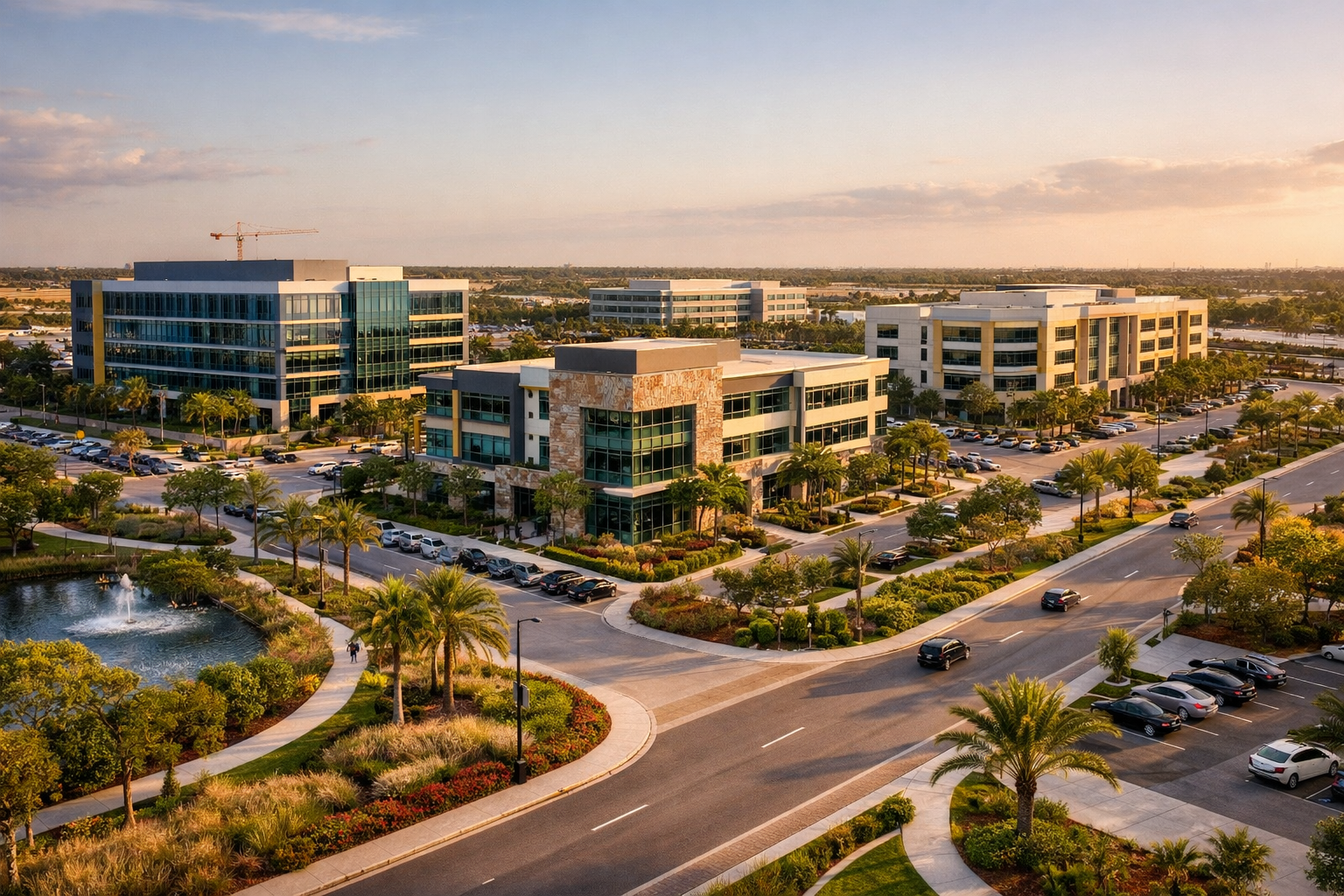
On September 1, 2026, Miami-Dade commissioners voted 9–3 to override the county mayor's veto and clear Kelly Tractor to build a headquarters and service campus of up to 2.7 million square feet on roughly 246 acres west of Northwest 137th Avenue, near the western end of the Dolphin Expressway by Sweetwater. The county did not move the Urban Development Boundary itself — it changed the development rules for that specific site through a comprehensive plan text amendment. It is the first time since 2013 that commissioners have opened land on the far side of the line to construction at this scale.
By Pedro Casanova | September 10, 2026
What the county actually approved
The vote ended a fight that ran roughly three years, survived eight deferrals, and required commissioners to override a mayoral veto — a rare outcome in Miami-Dade. As the South Florida Business Journal reported, the approval clears a heavy-equipment company to expand onto land it already owns just past the boundary.
The specifics:
- 246 acres west of Northwest 137th Avenue, near the Dolphin Expressway interchange, adjacent to an existing 100-acre warehouse development
- Up to 2.7 million square feet of industrial space — repair bays, heavy machinery storage, fueling stations, rail access, and a helipad
- More than 140 acres of the site is wetlands
- Commissioners first approved it in January 2026, the mayor vetoed it in February, and the override landed in September
Here is the part most coverage buried, and the part that matters most if you own property out west. The boundary line did not move. Kelly Tractor used a comprehensive plan text amendment rather than the standard boundary-expansion process — a route with a lower voting threshold, and reportedly the only one of fifteen boundary applications filed since 2021 to go that way. County planning staff recommended denial more than once, noting that Miami-Dade already held roughly 700 acres of vacant, industrially designated land inside the boundary, and warning that taxpayers could end up paying to extend infrastructure out to the site.
The last time the boundary itself moved was 2013, when about 500 acres near Doral — already surrounded by development — were folded in.
What it means if you own or buy in west Miami-Dade
The precedent is the story, not the tractors.
For twelve years, the practical answer to "can anything get built past the line?" was no. That answer just changed, and it changed through a procedural door that other landowners on the fringe are now free to walk through. If you own vacant or agricultural land near the boundary in west or south Miami-Dade, the option set on that parcel is broader today than it was a month ago. If you own a house near the boundary, the long-term picture around you is less fixed than it was.
I would not overstate this. One approval is not a policy, and the county's planning staff is still on record against it. But this is the kind of shift that shows up in land pricing before it shows up anywhere else.
This adds no housing.
Worth saying plainly, because "2.7 million square feet approved" reads like a supply story and it isn't. This is industrial. Zero rooftops. If you have been waiting for new construction to take pressure off prices in Doral, Fontainebleau, Sweetwater, or West Kendall, this project does nothing for that. The projects that actually move residential inventory look like the 38 townhomes coming to West Kendall from $650,000 or D.R. Horton's 232 homesites in Florida City — and against a Miami-Dade market where single-family homes have been running near a five-month supply, those additions are modest.
Employment nodes and truck routes cut both ways.
A campus this size, next to an existing warehouse cluster, with rail access, is an employment anchor. Employment anchors support housing demand in the surrounding submarket over time. That is the upside, and it's real.
The other side is that heavy industrial use brings truck traffic, and NW 137th Avenue and the SR-836 corridor are the routes it will use. If you're buying a home within a mile or two of that interchange, drive the approach road on a weekday morning before you write an offer, not after your inspection period closes.
Watch the infrastructure bill.
The staff warning about taxpayer-funded infrastructure extensions is the one I'd keep an eye on. Roads, water, and drainage out to a site past the boundary get paid for somehow. Whether that lands on the developer, a special taxing district, or the general millage is a live question, and it eventually touches the carrying cost of owning nearby.
Flood and insurance deserve a second look out here.
More than 140 acres of the site is wetlands, which means drainage patterns in that pocket of the county are about to be re-engineered. That is not a reason to avoid the area. It is a reason to treat flood zone designation and an actual insurance quote as non-negotiable due diligence if you're buying anywhere near the fringe — and to get that quote inside your inspection period, since insurability is not a contingency under the standard AS IS contract.
What to do about it
If you own within a few miles of the site: nothing changes on your tax bill or your value today. What changes is that you now have a material fact in the neighborhood that a future buyer will ask about. Keep a note of what you know. Your Property Seller's Disclosure covers known conditions that materially affect value, and "there's an approved 2.7 million square foot industrial campus going in past 137th" is the kind of thing you want to handle straightforwardly rather than have a buyer discover on their own two weeks before closing.
If you're buying in Doral, Sweetwater, Fontainebleau, or West Kendall: pull the flood zone designation, get a real insurance quote during your inspection window, and ask your agent to check what has been filed near the parcel. Approvals of this size generate a paper trail long before anything gets built.
If you own land near the boundary: the text amendment route is now proven. That's worth a conversation with a land-use attorney before you decide what your parcel is worth or how to market it.
And if you're simply trying to time a move: remember how long this took. Three years, eight deferrals, a veto, and an override. Site plans, permits, and construction still come after this. Nothing about the ground out there changes this quarter. Plan on the market you can see — and Miami-Dade's current market, where sales have been rising while condo prices soften, is a very different animal from the one a 2029 industrial campus might influence.
It's also worth noticing that Miami-Dade municipalities are moving in opposite directions on land use right now. The same month the county cleared this, Palmetto Bay was weighing an outright data center ban. Where you buy determines which set of rules you live under.
Frequently Asked Questions
Did Miami-Dade move the Urban Development Boundary?
No. Commissioners approved a comprehensive plan text amendment that changes the development rules for this specific site, which allows construction without relocating the line. The distinction matters legally and procedurally — and it's why the vote threshold was lower than a standard boundary expansion would have required.
Is this project residential?
No. It's an industrial headquarters and service campus — repair bays, machinery storage, fueling, rail access, and a helipad. It adds no housing units and will not affect residential inventory in Doral, Sweetwater, or West Kendall.
When would construction actually start?
The approval is a land-use step, not a permit. Site plans, permitting, and infrastructure work all come after. Given that the entitlement fight alone took about three years across eight deferrals and a mayoral veto, treat any near-term timeline you hear as optimistic until permits are pulled.
Should this change my decision to buy near NW 137th Avenue?
For most buyers, no — but it changes what you should check. Drive the corridor at rush hour, confirm the flood zone designation, and get a written insurance quote before your inspection period ends. Those are worth doing in that part of the county regardless.
Does this mean more land outside the boundary will be developed?
It's possible, and the procedural route used here is now a known path. But one approval isn't a policy shift, county planning staff remain opposed, and each application still goes through its own vote. Worth watching over the next two to four quarters rather than acting on today.
A land-use vote this far from your front door can feel like news that has nothing to do with you. Sometimes that's right. But if you own near the boundary, are shopping in west Miami-Dade, or hold land out there, what this changes for your specific situation depends on where your property sits and what your timeline looks like.
I'm happy to walk through it with you — you can grab a time here.
About Pedro Casanova
Pedro Casanova is a real estate broker that leads The KREN Group real estate team serving the Southeast Florida area. They specialize in helping people build wealth through real estate by helping buyers and sellers maximize their opportunity in every transaction. Connect with the team at www.thekrengroup.com.
The KREN Group | Keller Williams Premier Properties
Pedro Casanova
| The KREN Group | Keller Williams Premier Properties | PLACE
or another way