
Categories
Market Updates, Miami Community News, Neighborhood GuidesPublished September 7, 2026
364 Apartments Approved at a Goulds School Campus

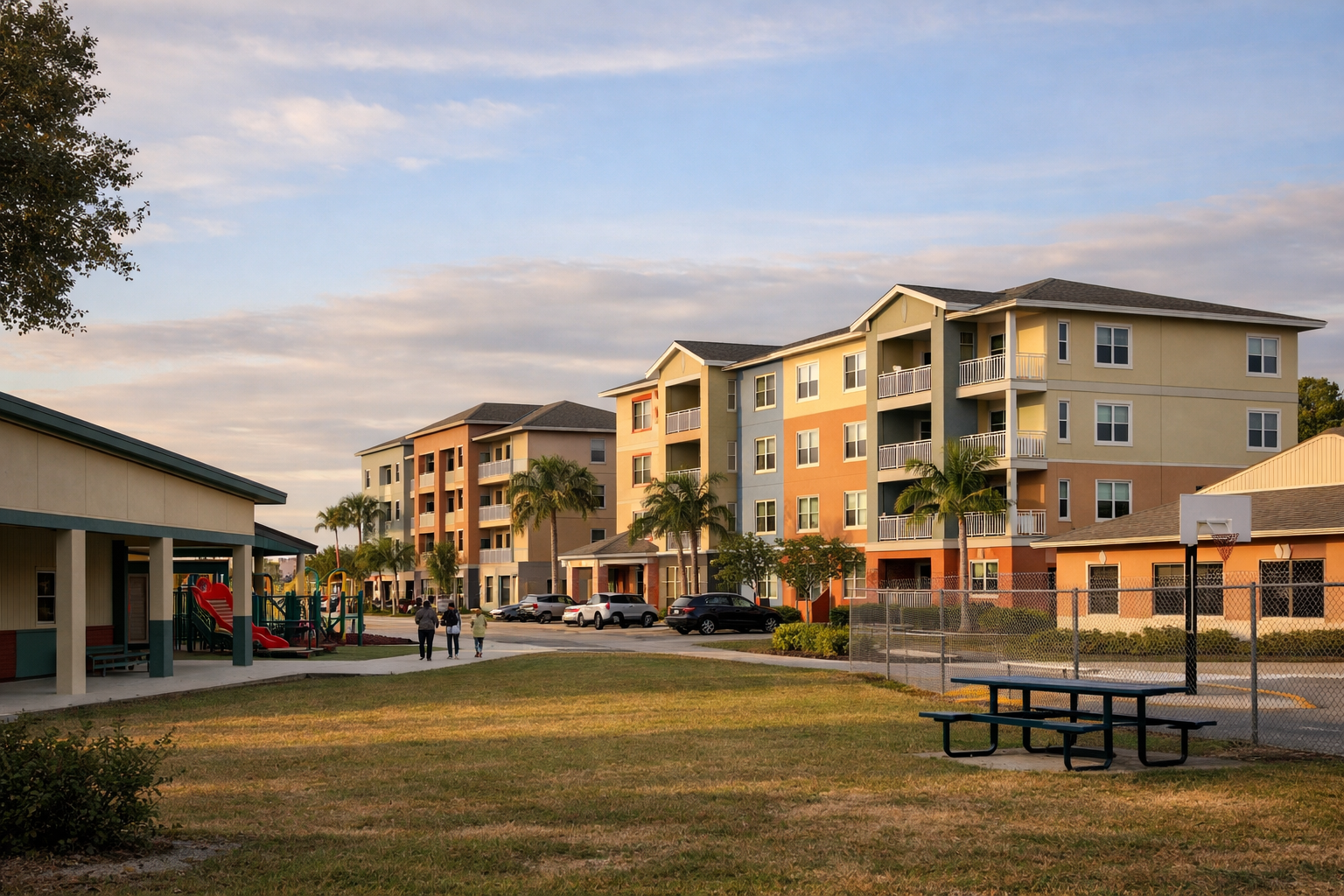
What's being built at the Arthur & Polly Mays campus in Goulds?
The Miami-Dade County School Board approved a 99-year ground lease that turns about 10.3 acres of the Arthur & Polly Mays Conservatory of the Arts campus at 11370 SW 216th Street in Goulds into roughly 364 income-restricted apartments. Atlantic Pacific Communities is the developer, the district keeps ownership of the land and collects about $12.74 million in capitalized lease payments, and eligible teachers and district employees get a leasing preference. Construction on the housing isn't expected to start until late 2029, with completion around 2031.
By Pedro Casanova | August 25, 2026
If you own a house, a townhome, or a rental anywhere between Cutler Bay and Homestead, a vote you probably didn't hear about just added a real number to your submarket's future supply. It's a long way out — but the timeline is exactly what makes it worth understanding now instead of in 2030.
What the school board actually approved
At its August 11th meeting, the Miami-Dade County School Board signed off on a 99-year ground lease and master development agreement with Atlantic Pacific Communities for a portion of the Arthur & Polly Mays Conservatory of the Arts site in Goulds, as the Miami Herald reported. Holland & Knight, the firm that represented the school board in the deal, published the terms a week later.
The pieces that matter:
- About 364 apartments on roughly 10.3 acres of the campus's 28.1-acre site at 11370 SW 216th Street
- Income-restricted, financed through low-income housing tax credits (LIHTC), which caps what the units can rent for and for how long
- The district keeps the land. It retains fee simple ownership and collects roughly $12.74 million in capitalized lease payments over the 99-year term
- A leasing preference for eligible school board teachers and district employees
- Plans filed with the county describe three stories, about 255,000 square feet, a pool and clubhouse, and 530 parking spaces — roughly 1.46 per unit
- Construction on the housing starts around late 2029 and is expected to finish in 2031
The housing sits inside a larger $85 million campus project that consolidates the Conservatory with the Pine Villa Elementary site — demolishing 13 buildings, retrofitting 15, and adding a 700-seat auditorium, with campus work targeted for summer 2029.
One more thing worth noticing: Atlantic Pacific is the same developer behind the 250 apartments filed for Overtown near the Culmer Metrorail station earlier this month. This isn't a one-off. It's a pattern of building rental supply on publicly owned land, and South Dade is now on that map.
What 364 income-restricted units do to South Dade
Here's where most coverage stops and where the part that affects your money starts.
First, understand what this supply is and isn't. LIHTC units are rentals with capped rents and income limits on tenants. They do not become for-sale inventory, and they don't compete with your house or your townhome on the MLS. So if you own in Goulds, Naranja, Princeton, or Cutler Bay and your first thought was "this will hurt my resale," that's not the mechanism to worry about.
The mechanism to watch is rents. New supply pressures rents before it pressures sale prices — that's the reliable pattern, and it's already visible countywide. Miami-Dade's apartment pipeline sat at roughly 19,131 units as of June 2026, about 9.7% of existing inventory, and trailing-year absorption has been running almost exactly even with completions. That balance is why county asking rents have been close to flat — around $2,660 a month in May 2026, up only about 1.5% year over year.
Add 364 units to South Dade in 2031 and the effect on market-rate rents nearby is real but modest. Income-restricted product pulls from a different tenant pool than a market-rate two-bedroom, so it doesn't compete unit-for-unit. What it does is take pressure off the bottom of the rental ladder in a corridor where that pressure has been the tightest.
If you own a rental in South Dade, the honest read is this: your carrying costs — insurance, taxes, and maintenance — are the thing squeezing your returns right now, not a building that breaks ground in four years. I've walked through that math with a number of owners this year, and the sell-or-hold decision on a Miami-Dade rental almost always turns on insurance renewals and financing, not on future supply. Don't let a 2031 delivery date drive a 2026 decision.
For the for-sale market, the more relevant signal is what's happening around this site, not on it. South Dade is absorbing new construction from several directions at once — including D.R. Horton's 232 approved homesites in Florida City. Homestead's median sale price was about $447,750 as of MLS data through August 10, down roughly 2.5% from a year ago, while Cutler Bay was closer to $590,000 in May and up about 2.2%. That gap is the story: builder-heavy pockets are flat to soft, and the established resale pockets are holding.
Countywide, the picture is split. Miami-Dade single-family median prices rose about 3.8% year over year in July, from $660,000 to $685,000, while condo prices slipped about 1.5% to $400,000 with 12 months of supply. Single-family across South Florida is tighter, around 4.2 months. If you're pricing a South Dade house this fall, you're competing with builder incentives more than with anything the school board approved.
What to watch if you own or are buying near SW 216th Street
If you own nearby. The near-term variable isn't the apartments — it's the campus construction. Demolition and rebuild work on a 28-acre site affects traffic patterns, street access, and showing logistics for years before any housing goes vertical. If you expect to sell between now and 2029, ask your agent to check the county's permit and site plan activity for the block before you set a list price, and be ready to answer buyer questions about it directly. Buyers find this stuff. It's better coming from you.
If you're buying in South Dade. A confirmed rental project a few blocks away is a fact you should price in, not a reason to walk. Ask two questions: does the property back up to the site or merely sit near it, and what's the construction window relative to your holding period. A buyer planning to stay 10 years and a buyer planning to stay 3 should read this differently.
If you're an investor. Watch what else the district does. The board is treating campus land as a capital asset, and this is the largest project of its kind it has done. More sites will follow. Knowing which ones — before they're announced — is a genuine edge in a submarket where land basis still pencils.
Nothing here changes what a house in Goulds is worth this month. It changes what the corridor looks like by the end of the decade, and that's a timeline most owners can actually plan around.
Frequently Asked Questions
Where exactly is this project?
At 11370 SW 216th Street in Goulds, in South Miami-Dade. The apartments would occupy about 10.3 acres of the Arthur & Polly Mays Conservatory of the Arts campus, which totals roughly 28.1 acres.
Will this lower home values in Goulds?
There's no basis to claim it will. These are income-restricted rental units, not for-sale homes, so they don't add competing MLS inventory. New rental supply typically affects rents before it affects sale prices, and this delivery is roughly five years out. Anyone telling you they can quantify a price effect today is guessing.
When will the apartments actually be built?
Construction on the housing is expected to begin around late 2029 and finish in 2031. The broader campus redevelopment it's attached to is targeted for summer 2029. Development timelines slip regularly, so treat those dates as a plan, not a promise.
Who can rent these units?
The units are income-restricted under the low-income housing tax credit program, which sets income limits for tenants and caps rents. The ground lease also includes a leasing preference for eligible Miami-Dade school board teachers and district employees.
Does the school district still own the land?
Yes. The district retains fee simple ownership and leases the ground to the developer for 99 years, collecting about $12.74 million in capitalized lease payments.
The short version: South Dade just got a confirmed line item in its 2031 supply picture, and it's rental, not for-sale. That matters more to rent comps and to investors than it does to anyone selling a house this year.
If you own near SW 216th Street or you're shopping in South Dade right now, what this actually means for your situation depends on your timeline and your numbers. I'm happy to walk through it — you can grab a time here.
About Pedro Casanova
Pedro Casanova is a real estate broker that leads The KREN Group real estate team serving the Southeast Florida area. They specialize in helping people build wealth through real estate by helping buyers and sellers maximize their opportunity in every transaction. Connect with the team at www.thekrengroup.com.
The KREN Group | Keller Williams Premier Properties
Pedro Casanova
| The KREN Group | Keller Williams Premier Properties | PLACE
or another way