
Categories
Homeownership, HOA FEE'SPublished September 2, 2026
Miami HOA Fees Hit $617 — Highest Burden in the U.S.

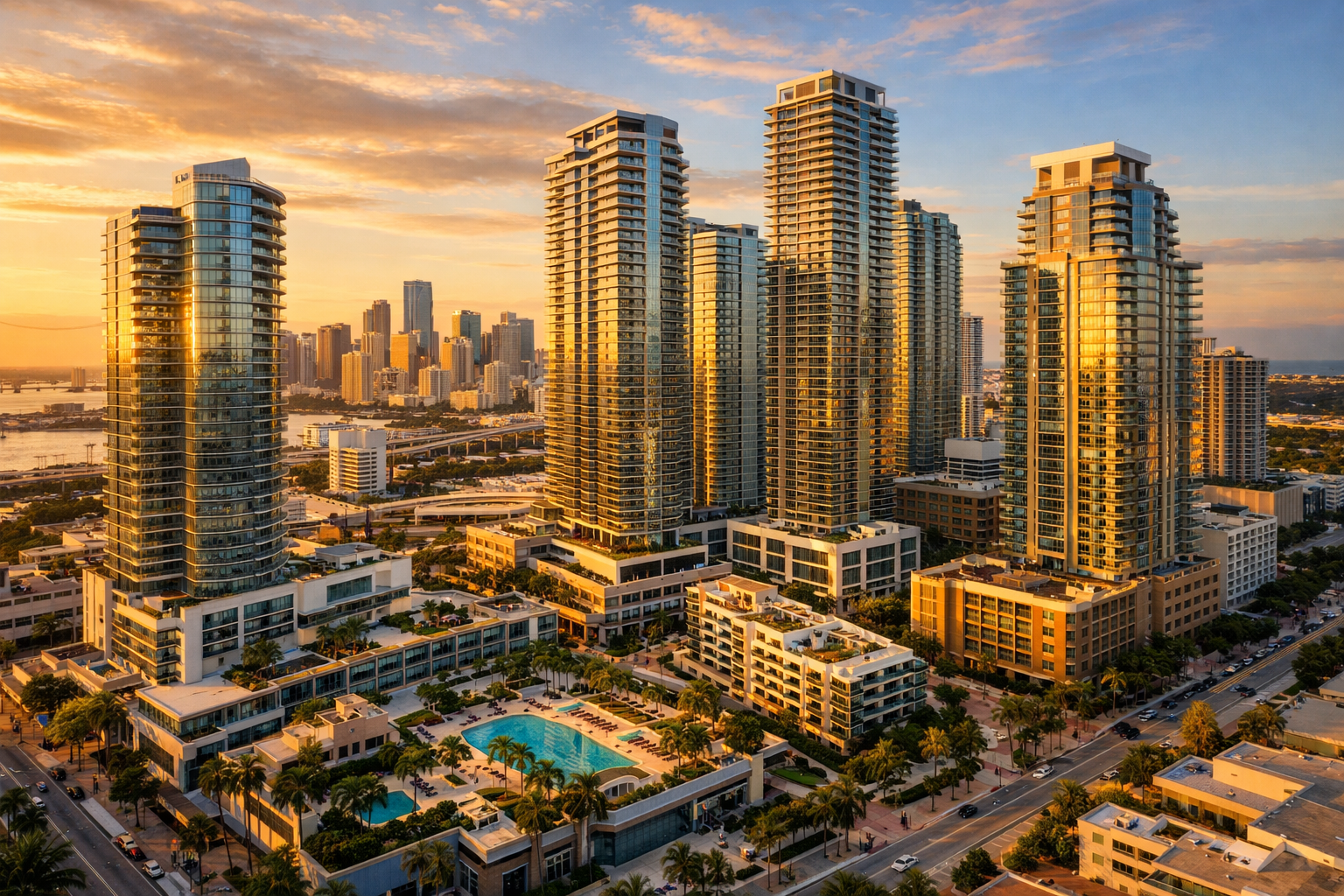
Miami HOA Fees Hit $617 — Highest Burden in the U.S.
How much are HOA fees in Miami?
The median homeowners association fee in the Miami–Fort Lauderdale–West Palm Beach metro is $617 a month, which works out to 26.9% of a typical mortgage payment on a median-priced $425,000 home that carries an HOA. That's the heaviest HOA cost burden of any metro in the country, according to Realtor.com's 2026 Homeowners Association Report. Nationally the median fee is $135 a month, so a Miami-Dade buyer is carrying more than four times the country's dues load before the mortgage is even in the picture.
By Pedro Casanova | August 20, 2026
New data ranking the country's association-fee markets landed this month, and South Florida didn't just make the list — it took the top spot. As the South Florida Business Journal reported, rising dues are hitting some markets far harder than others, and Miami sits at the front of that group.
Here's what the underlying report found:
- $617 — median monthly HOA fee across the Miami–Fort Lauderdale–West Palm Beach metro
- 26.9% — the share of a typical monthly mortgage payment those dues represent, ranking No. 1 in the nation
- $135 — the national median monthly HOA fee in 2025, up from $108 in 2019
- 43.6% — the share of homes listed for sale nationwide that now carry an HOA fee
- Florida metros took the top five spots for HOA burden: Miami, Panama City (22.7%), Naples (20.3%), Cape Coral (19.6%), and Port St. Lucie (18.9%)
One more number worth sitting with: roughly 39.5% of Miami owners in association-governed properties pay $500 or more every month. That isn't a luxury-tower statistic. That's a mainstream Miami-Dade ownership cost.
Why Miami-Dade Dues Run So Far Ahead of the Country
A $135 national median and a $617 Miami-Dade median aren't measuring the same product. Three cost drivers explain most of the gap, and none of them are going away this year.
Insurance is the biggest single line item. Master policy premiums for coastal buildings have climbed hard since 2022, and in a mid-rise or high-rise that cost lands in your monthly dues rather than your own policy. In a typical Miami-Dade high-rise, the master policy alone can account for several hundred dollars per unit per month. You never see a bill for it — you see a higher assessment.
Reserve funding is now mandatory, not optional. Under Florida's structural integrity reserve study requirements (F.S. 718.112(2)(g)), the initial SIRS deadline passed on December 31, 2025, and associations with three or more habitable stories must fully fund identified structural reserves in their 2026 budgets. For years, boards kept dues artificially low by voting to waive reserves. That lever is gone. Buildings that deferred are now catching up in a single budget cycle, and the catch-up shows up as a dues increase, a special assessment, or both. The required-item threshold sits at $25,675 for 2026.
Milestone inspections cost real money before anything gets repaired. A milestone inspection under F.S. 553.899 typically runs $5,000 to $20,000 or more, and that's just the engineering. Whatever the report finds has to be funded on top of it.
Add those together and you get a market where the monthly carrying cost of a condo has changed more in three years than the purchase price has. I've watched buyers qualify comfortably on the mortgage and then get stopped cold by the estoppel letter.
What This Changes If You're Buying
The practical effect is that your purchase price is no longer the number that decides what you can afford. A $425,000 unit with $617 in dues carries differently than a $500,000 single-family home with no association at all — and in a lot of Miami-Dade submarkets, that's a live comparison rather than a hypothetical one.
Three things to do before you're under contract:
- Underwrite the dues, not the list price. Run the full monthly number — principal, interest, taxes at the non-homestead assessed value, your own insurance, and the association dues. Lenders include HOA dues in your debt-to-income ratio, so a high-dues building shrinks your approval amount whether you plan for it or not.
- Read the SIRS and the milestone report, not the summary. Ask for the structural integrity reserve study, the milestone inspection report if the building is old enough to require one, the last two years of budgets, and the current reserve balances. A fully funded building with higher dues is often a better financial position than a cheap-dues building that hasn't done the work yet.
- Use the review windows you're given. Florida gives condo buyers a document review period — including the seven-day voidability window on association documents in many resale situations — and the estoppel letter will disclose pending special assessments. These are the mechanisms that keep a surprise from becoming your problem after closing. If you're new to the process, our Miami-Dade first-time buyer cost breakdown walks through where these fall in the timeline.
The one piece of good news: this is a buyer's market for condos. Existing condominium inventory in Miami-Dade sat around 12.3 months of supply as of June 2026, which is deep buyer territory. You have room to be selective about which building's balance sheet you take on, and room to negotiate.
What This Changes If You're Selling
If you own in a high-dues building, the dues are now part of how your listing gets priced by the market — whether or not they're part of how you price it.
Buyers shopping a $500,000 budget are running the carrying cost, and a $900 monthly assessment can move your unit out of their comparison set entirely even though the sticker price fits. That's the mechanism behind soft mid-market condo pricing right now, and it's worth understanding before you set a number.
What actually helps:
- Get ahead of the disclosure. Pending special assessments, an unfunded SIRS, or an open milestone item will surface in the estoppel letter and the Property Seller's Disclosure. Finding out about them alongside your buyer, two weeks before closing, is how deals fall apart.
- Document what the dues buy. If your association has completed its milestone inspection, funded its reserves, and finished its concrete restoration, that's a genuine selling point in this market — a buyer taking on a fully funded building is taking on a known cost instead of an open-ended one. Say so, with the documents to back it.
- Know the difference between a dues problem and a pricing problem. They call for different responses. If you're weighing whether an assessment changes your timeline, we covered that decision in detail in selling your Miami-Dade condo before a special assessment hits.
For owners of association-governed rentals, the math is tighter still, since dues come straight out of net operating income — worth a fresh look at whether the hold-or-sell numbers still work at current carrying costs.
Frequently Asked Questions
Why are Miami HOA fees so much higher than the national median?
Three drivers do most of the work: coastal master insurance premiums that land in your dues rather than your own policy, Florida's mandatory structural reserve funding that took effect for 2026 budgets, and milestone inspection and repair costs on older buildings. National medians are pulled down by inland single-family HOAs that maintain a common lawn and little else.
Can my association raise dues without a vote of the owners?
In most cases, yes — boards adopt the annual budget, and dues follow from it. What changed recently is that associations required to obtain a structural integrity reserve study can no longer vote to waive or underfund those structural reserves, which removed the main tool boards used to hold dues down.
Are high HOA fees hurting Miami-Dade property values?
Dues affect what a buyer can afford to pay, because lenders count them in your debt-to-income ratio and buyers count them in their monthly budget. That pressure shows up first in longer marketing times and more negotiation, particularly in the mid-market condo segment. It isn't uniform, and a fully funded building with higher dues often competes better than a low-dues building with deferred work.
Should I avoid buying a condo in Miami-Dade because of the fees?
Not on the fee alone. A high monthly number in a building that has completed its milestone inspection and funded its reserves can be a more predictable cost than a low number in a building that hasn't. What matters is what the dues are paying for and what's still unfunded — which is exactly what the SIRS, budget, and estoppel letter tell you.
Do these fees apply to single-family homes too?
Often. Nearly 44% of homes listed nationwide now carry an association fee, and many Miami-Dade single-family communities have HOAs. Those dues are typically far lower than a condo's, because there's no master insurance policy on a shared structure and no structural reserve obligation — but they still count in your monthly math and your loan qualification.
Miami-Dade is the most HOA-expensive metro in the country relative to what people pay for their mortgages, and the drivers behind that — insurance, mandated reserves, and inspection compliance — are structural rather than temporary. The number on the listing has stopped being the number that decides your outcome.
What that means for you specifically comes down to your building, your timeline, and your numbers, and those are very different conversations for an owner in a fully funded mid-rise than for a buyer comparing a condo against a single-family home in Kendall. I'm glad to walk through your version of it — you can grab a time here.
About Pedro Casanova
Pedro Casanova is a real estate broker that leads The KREN Group real estate team serving the Southeast Florida area. They specialize in helping people build wealth through real estate by helping buyers and sellers maximize their opportunity in every transaction. Connect with the team at www.thekrengroup.com.
The KREN Group | Keller Williams Premier Properties

Pedro Casanova
| The KREN Group | Keller Williams Premier Properties | PLACE
or another way