
Published May 31, 2026
Miami Outpaces Other FIFA World Cup Host Cities in Hotel Bookings Ahead of 2026 Tournament

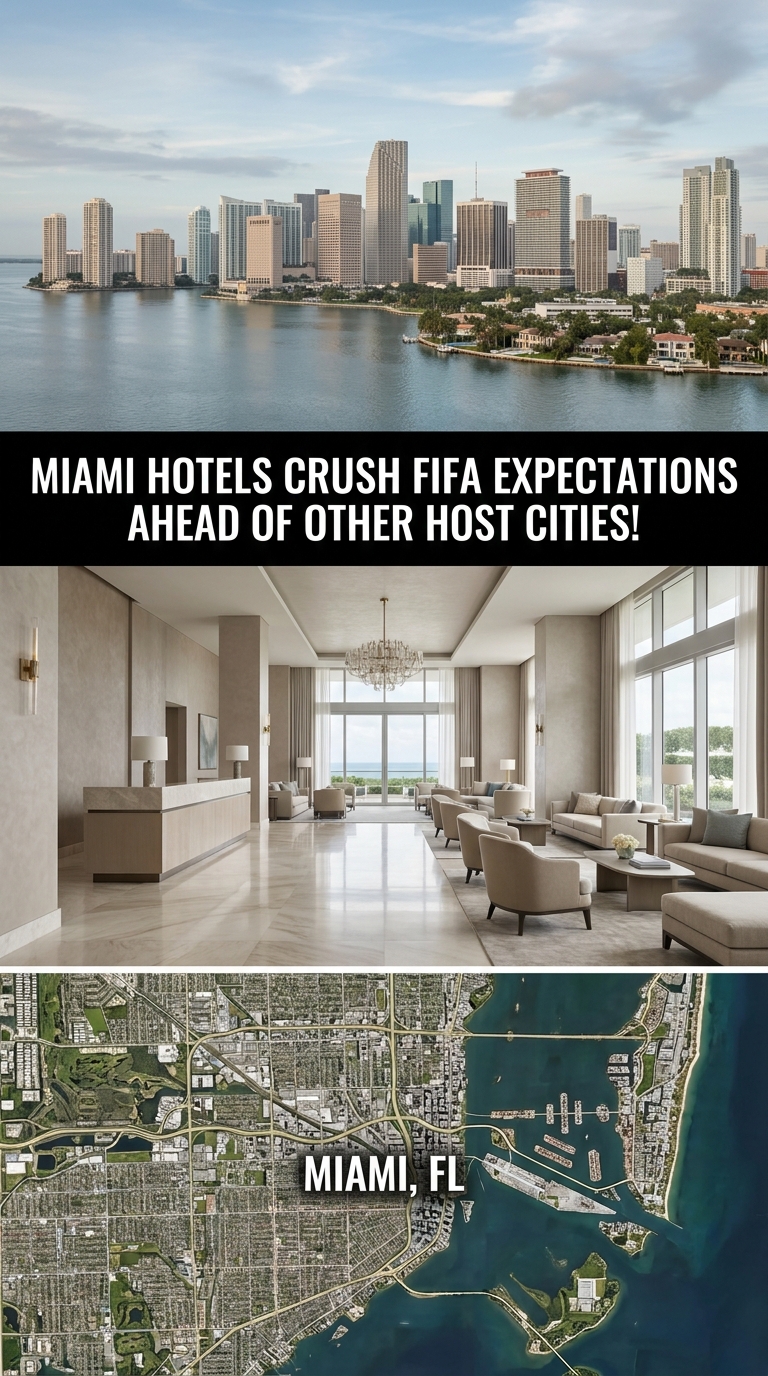
Miami Outpaces Other FIFA World Cup Host Cities in Hotel Bookings Ahead of 2026 Tournament
As anticipation builds for the 2026 FIFA World Cup, Miami is already separating itself from many other host cities across North America when it comes to tourism demand and hotel bookings. According to recent hospitality reports, Miami is outperforming most FIFA host markets ahead of the tournament, reinforcing the city’s position as one of the world’s premier international destinations.
The 2026 FIFA World Cup will be one of the largest sporting events in history, featuring 48 national teams and matches spread across the United States, Canada, and Mexico. Miami is scheduled to host seven matches, including high-profile knockout-stage games and the Bronze Final, bringing enormous global exposure to South Florida.
While many host cities are reportedly experiencing slower-than-expected hotel demand, Miami has emerged as one of the strongest-performing markets. Industry reports show that hotel and short-term rental bookings in South Florida are significantly outperforming many competing host cities due to the region’s international appeal, tourism infrastructure, and strong global brand recognition.
One of the biggest reasons behind Miami’s strong performance is its global tourism appeal that extends far beyond soccer. Unlike some host markets that rely primarily on the tournament itself to drive visitation, Miami already attracts millions of international travelers annually thanks to its beaches, nightlife, luxury hospitality, dining scene, and cultural diversity. The World Cup is simply adding another major layer to an already powerful tourism engine.
Short-term rental demand has also surged dramatically ahead of the tournament. According to AirDNA data, some Miami match dates have seen booking demand jump between 54% and 118% year-over-year, with certain marquee matches driving even larger spikes.
Miami’s strong international connectivity is another major advantage. Miami International Airport remains one of the busiest gateways for Latin America, Europe, and the Caribbean, making the city especially attractive for international soccer fans traveling from around the world. Combined with South Florida’s established hospitality industry and luxury accommodations, Miami is positioned to capture a major share of tournament-related tourism spending.
The economic impact could extend well beyond hotels and vacation rentals. Experts believe the World Cup will generate major boosts for restaurants, retail, transportation, entertainment venues, and local businesses throughout Miami-Dade and Broward counties.
The strong booking pace also highlights the continued resilience of Miami’s tourism and real estate sectors despite broader economic uncertainty. South Florida has continued attracting visitors, investors, and new residents from around the globe, helping fuel ongoing demand across hospitality, residential, and commercial real estate markets.
At the same time, the tournament is expected to further elevate Miami’s global profile as a destination for international business, sports, and entertainment. Large-scale global events often create long-term benefits that extend beyond immediate tourism spending by strengthening a city’s international brand recognition and attracting future investment opportunities.
As the countdown to the 2026 FIFA World Cup continues, Miami appears well-positioned to capitalize on the event in a way few other host cities can. With strong booking activity already underway and millions of fans expected to visit South Florida, the tournament could become another defining milestone in Miami’s continued rise as a global destination city.


