
Published May 17, 2026
Padel Courts Proposed in Miami-Dade Business Park as Sport’s Popularity Explodes

Written by Sandra Fonticiella-Casanova
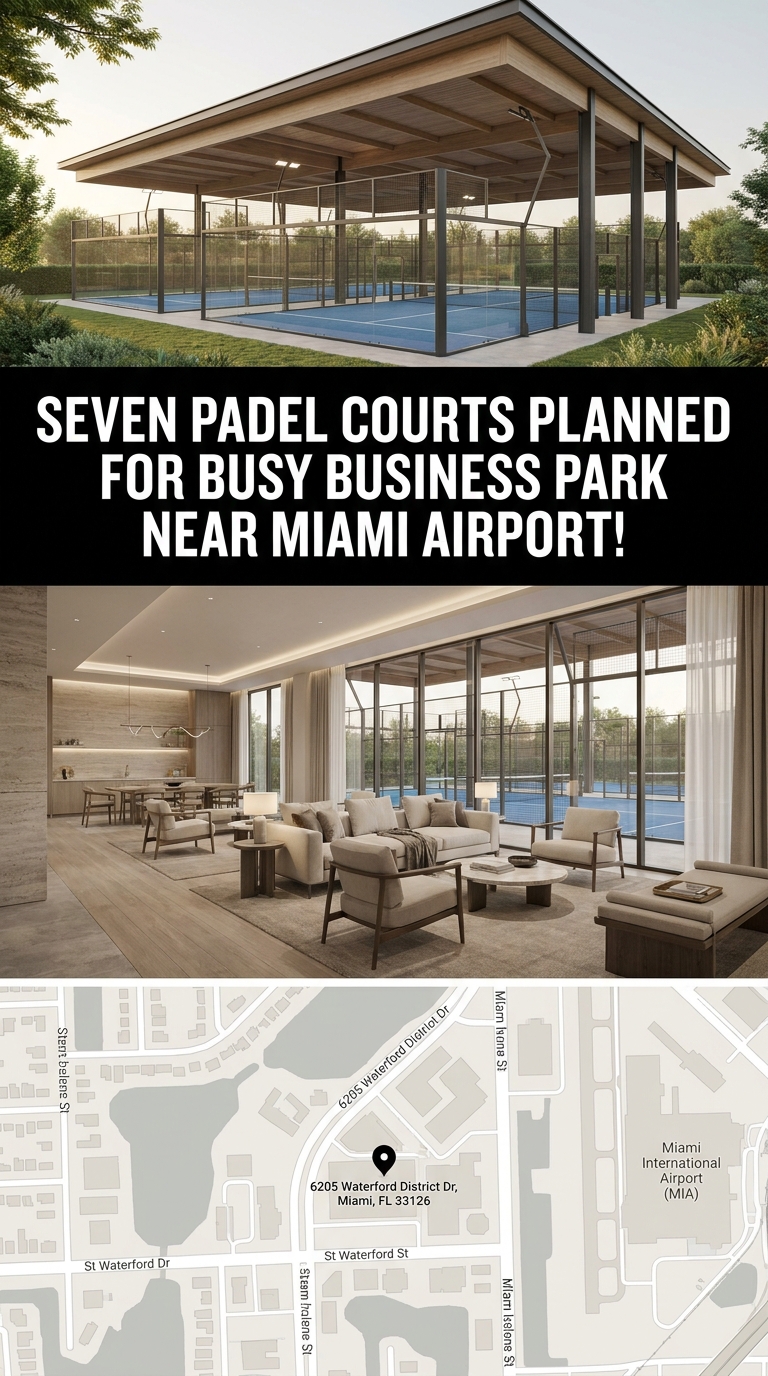
Padel Courts Proposed in Miami-Dade Business Park as Sport’s Popularity Explodes
Miami’s obsession with padel continues growing, and now the fast-rising sport could soon make its way into another unexpected location: an industrial business park in Miami-Dade County.A new proposal would bring padel courts to a business park property, highlighting how the sport is rapidly becoming one of South Florida’s hottest lifestyle and recreational trends. Once considered a niche activity primarily popular in Europe and Latin America, padel has quickly evolved into a major part of Miami’s social and wellness culture.
The proposed project reflects a broader movement happening throughout South Florida, where developers and property owners are increasingly integrating lifestyle amenities into commercial and mixed-use spaces. From luxury residential towers to office developments and now industrial business parks, padel courts are becoming a highly desirable feature across multiple property sectors.
Padel combines elements of tennis and squash and is typically played in doubles on smaller enclosed courts. The game’s accessibility, social nature, and fast-paced format have helped fuel explosive growth in cities like Miami, where outdoor wellness and social networking often overlap.
Over the past few years, padel clubs and private courts have expanded rapidly throughout neighborhoods including Wynwood, Brickell, Doral, and Miami Beach. Celebrity endorsements, luxury branding, and strong international appeal have also contributed to the sport’s rising profile in South Florida.
Now, the trend appears to be extending beyond traditional recreational facilities.
The proposal to introduce padel courts within a Miami-Dade business park demonstrates how commercial real estate owners are adapting to changing tenant expectations and lifestyle demands. Modern business environments are increasingly prioritizing wellness-driven amenities designed to attract both companies and employees seeking more flexible and engaging work experiences.
This mirrors larger workplace trends emerging across major urban markets. As employers continue competing for talent, amenities such as fitness centers, wellness spaces, outdoor gathering areas, and recreational activities are becoming important differentiators for office and commercial properties.
In Miami specifically, lifestyle has become deeply connected to real estate value. Developers and landlords are recognizing that experiential amenities can significantly enhance a property’s appeal while also creating community engagement opportunities.
Padel fits naturally into Miami’s culture. The sport aligns with the city’s international energy, year-round outdoor climate, and luxury lifestyle branding. It also attracts a wide demographic, from young professionals and entrepreneurs to families and international residents.
Beyond recreation, padel has also become a networking tool within Miami’s business community. Many local professionals now use the sport as both a social activity and relationship-building platform, further increasing demand for accessible court locations throughout the region.
As South Florida continues evolving, projects like this showcase how real estate development is increasingly blending work, wellness, and entertainment into integrated lifestyle environments.
While the proposal is still moving through the approval process, it signals a clear trend shaping Miami-Dade County: recreational amenities are no longer limited to luxury condos or private clubs. They are becoming part of everyday commercial and urban development strategies.
With padel’s popularity showing no signs of slowing down, Miami may continue positioning itself as one of the sport’s fastest-growing hubs in the United States.


