
Categories
Homeownership, Selling a HomePublished August 24, 2026
Sell First or Buy First When Moving Up in Miami-Dade?

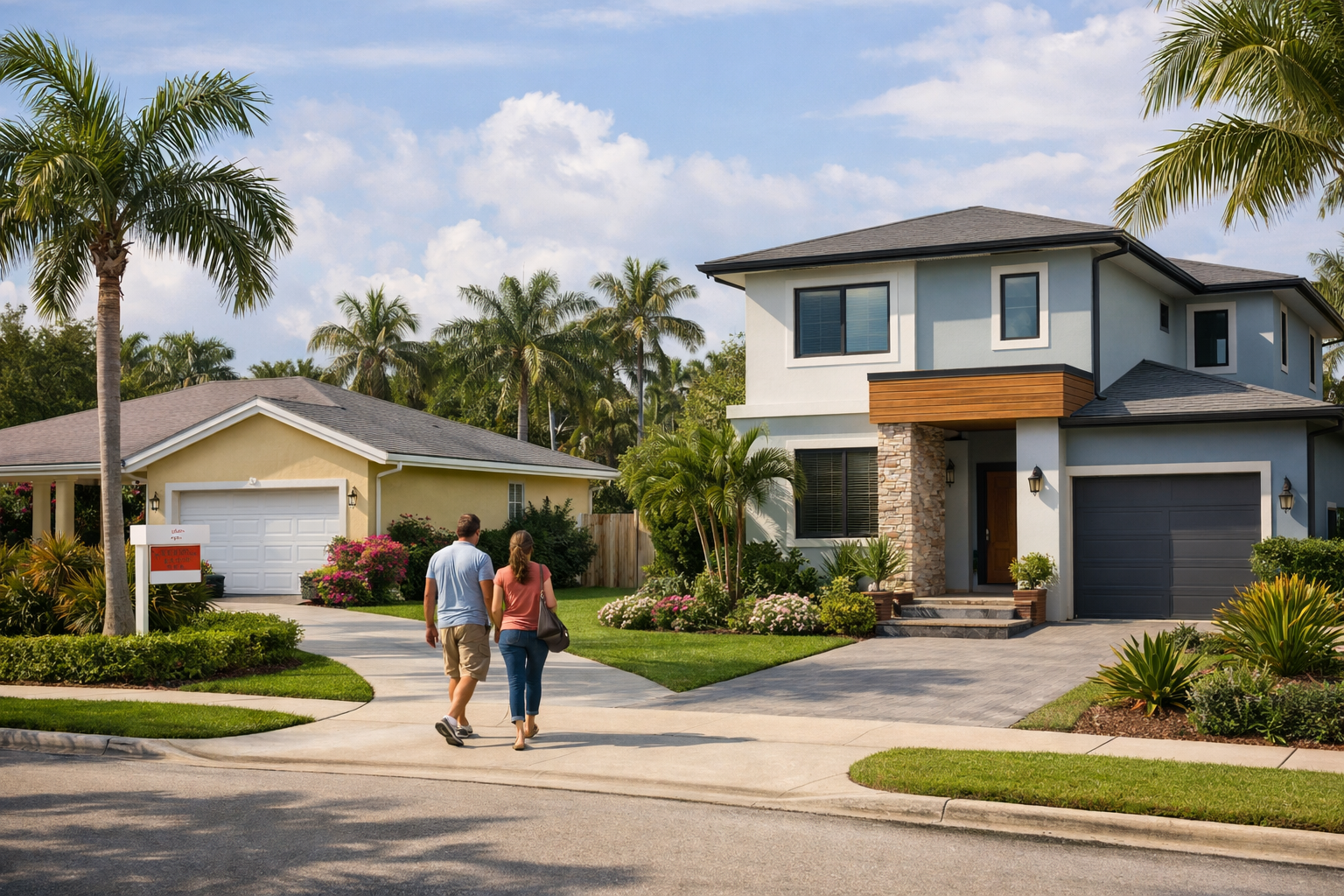
Sell First or Buy First When Moving Up in Miami-Dade?
Should You Sell Your House Before Buying a New One in Miami-Dade?
There's no universal answer, but the 2026 market tips the scale toward buying with more flexibility than usual. Miami-Dade's buyer's market means sellers are more willing to accept contingent offers, and financing tools like HELOCs, bridge loans, and rent-back agreements can bridge the gap either way. The right choice depends on your equity, your risk tolerance, and how specific your search criteria are for the next home.
By Pedro Casanova | August 14, 2026
Every move-up buyer I talk to asks some version of the same question: do I sell my house first, or do I find the new one first? For years, the answer in Miami-Dade was simple — sell first, because inventory was tight and sellers held all the leverage. That's not quite true anymore.
Miami-Dade's Buyer's Market Changes the Calculus
Miami is sitting in one of the more buyer-favorable positions it's seen in years. Homes are averaging over 100 days on market, and Redfin scores the metro a 7 out of 100 for competitiveness — not very competitive, in their words.
The picture isn't uniform across property types. Single-family homes have around 5 months of supply, which keeps that segment close to balanced. Condos are sitting at 12+ months of supply, squarely in buyer's-market territory, with median time to contract stretching to 85 days, up from 68 a year ago.
What that means for you as a move-up buyer: sellers who might have rejected a contingent offer outright two years ago are now negotiating on them. That single shift changes which of the strategies below makes the most sense for your situation.
It's not all in your favor, though. Florida's 30-year fixed rate is running 6.6% to 6.9% this month, which still eats into how much house your monthly payment buys — even with more room to negotiate on price.
How to Bridge the Gap Between Selling and Buying
If you don't want to be stuck carrying two mortgages or scrambling for temporary housing, you have four real options. Each one trades cost for certainty in a different way.
A HELOC on your current home. This is usually the cheapest way to unlock your equity for a down payment on the next place, running somewhere in the 8.5% to 9.5% range. The catch: most lenders won't approve a HELOC once your house is actively listed, so this only works if you set it up before you put a sign in the yard. Plan a few months ahead if this is your route.
A bridge loan. More expensive than a HELOC — typically 9% to 11% APR plus 1% to 3% in fees — but it doesn't require the same advance planning, and it lets you make a non-contingent offer on the new house even after you've listed the old one. Lenders generally want 20%-plus equity and a credit score in the high 600s or better. Most bridge loans run 6 to 12 months and get paid off the day your current home closes.
A rent-back agreement. This flips the order: you list and sell your current home first, then negotiate to stay in it as a renter for 30 to 60 days while you finish shopping or wait for your new place to close. In Florida, this needs to be in writing, with the rent, security deposit, and move-out date spelled out clearly — don't rely on a verbal understanding with your buyer. It's often the lowest-cost option since you're not paying loan interest at all, just short-term rent.
A back-to-back closing. Close the sale of your current home in the morning, then close on the new one that afternoon, using the proceeds from the first to fund the second. It's the cleanest financially — no bridge loan, no carrying two mortgages — but it's logistically tight. One delayed closing can knock the other one off schedule, so this works best with a title company that's coordinating both sides closely.
Every situation is different here, and the only way to know which of these actually pencils out for your numbers is to run them with someone who's coordinated this exact kind of double transaction before.
Don't Let Taxes and Insurance Surprise You
Two things trip up move-up buyers who haven't done this in a while: what happens to your tax benefit, and what your new insurance bill actually looks like.
Homestead portability. If you've built up a Save Our Homes benefit on your current home, you can transfer up to $500,000 of that accumulated tax savings to your next Miami-Dade homestead. You'll need to file Form DR-501T along with your new homestead application, and you have to establish the new homestead within three tax years of giving up the old one. The application deadline is March 1 of the year you want the benefit applied — file it as soon as you close, don't wait.
Capital gains on the sale. If your current home has appreciated significantly, the federal Section 121 exclusion lets you exclude up to $250,000 of gain if you're single, or $500,000 if you're married filing jointly — as long as you've owned and lived in it as your primary residence for at least two of the last five years. Florida has no state capital gains tax on top of that, so for most move-up sellers, this isn't the cost driver people assume it will be.
Insurance on the new place. This is the one people underestimate most. A bigger or newer home usually costs more to insure, since premiums track rebuild cost. Florida's average annual homeowners policy is running around $8,292, and coastal Miami-Dade tends to run well above that inland average. Before you fall in love with a bigger house in Pinecrest or a newer build in Doral, get an insurance quote — not just a mortgage quote — so you know your real monthly number.
Doc stamps on both sides. You'll pay documentary stamp tax on the sale of your current home and, depending on how the contract is written, potentially on the deed for your new purchase too. In Miami-Dade, that's $0.60 per $100 of consideration for single-family homes, with an additional $0.45 per $100 surtax on condos and other non-single-family properties. On a $700,000 sale, that's roughly $4,200 in doc stamps alone — worth building into your math on both ends of the transaction.
Frequently Asked Questions
Is Miami-Dade currently a buyer's or seller's market?
It depends on the property type. Single-family homes are close to balanced with around 5 months of supply, while condos are firmly in buyer's-market territory with 12-plus months of supply and homes taking 85 days on average to go under contract.
Can I make an offer on a new home before my current one sells?
Yes, and it's more common in this market than it was two years ago. You can use a HELOC or bridge loan to fund the purchase without a sale contingency, or write a contingent offer — which more Miami-Dade sellers are now willing to accept given current inventory levels.
How long can I stay in my house after I sell it?
Most rent-back agreements in Florida run 30 to 60 days, though the exact term is negotiable between buyer and seller. It needs to be a written agreement covering rent, deposit, and the move-out date, not a handshake deal.
Will I lose my homestead tax savings if I move to a more expensive house?
Not if you file for portability. You can transfer up to $500,000 of your accumulated Save Our Homes benefit to your new Miami-Dade homestead, as long as you establish the new homestead within three tax years and file the required forms by the March 1 deadline.
Does it cost more to insure a bigger house in Miami-Dade?
Generally, yes — insurance premiums are tied to rebuild cost, so a larger or newer home typically carries a higher annual premium. Get a real insurance quote before you commit to a price range, especially if you're moving into a coastal or flood-zone area.
If you're weighing whether to sell first or buy first, the honest answer is that it depends on your equity position, your risk tolerance, and how particular you are about the next house. I walk clients through this exact decision regularly, running the real numbers for their specific situation instead of a generic rule of thumb. If you want to work through your own numbers, I offer a free buying or selling strategy session — no pressure, just a straight conversation about where you stand and what your options actually look like. You can grab a time here.
About Pedro Casanova
Pedro Casanova is a real estate broker that leads The KREN Group real estate team serving the Southeast Florida area. They specialize in helping people build wealth through real estate by helping buyers and sellers maximize their opportunity in every transaction. Connect with the team at www.thekrengroup.com.
The KREN Group | Keller Williams Premier Properties

Pedro Casanova
| The KREN Group | Keller Williams Premier Properties | PLACE
or another way