
Categories
Selling a HomePublished August 17, 2026
Should You Sell Your Miami-Dade Rental Property in 2026?

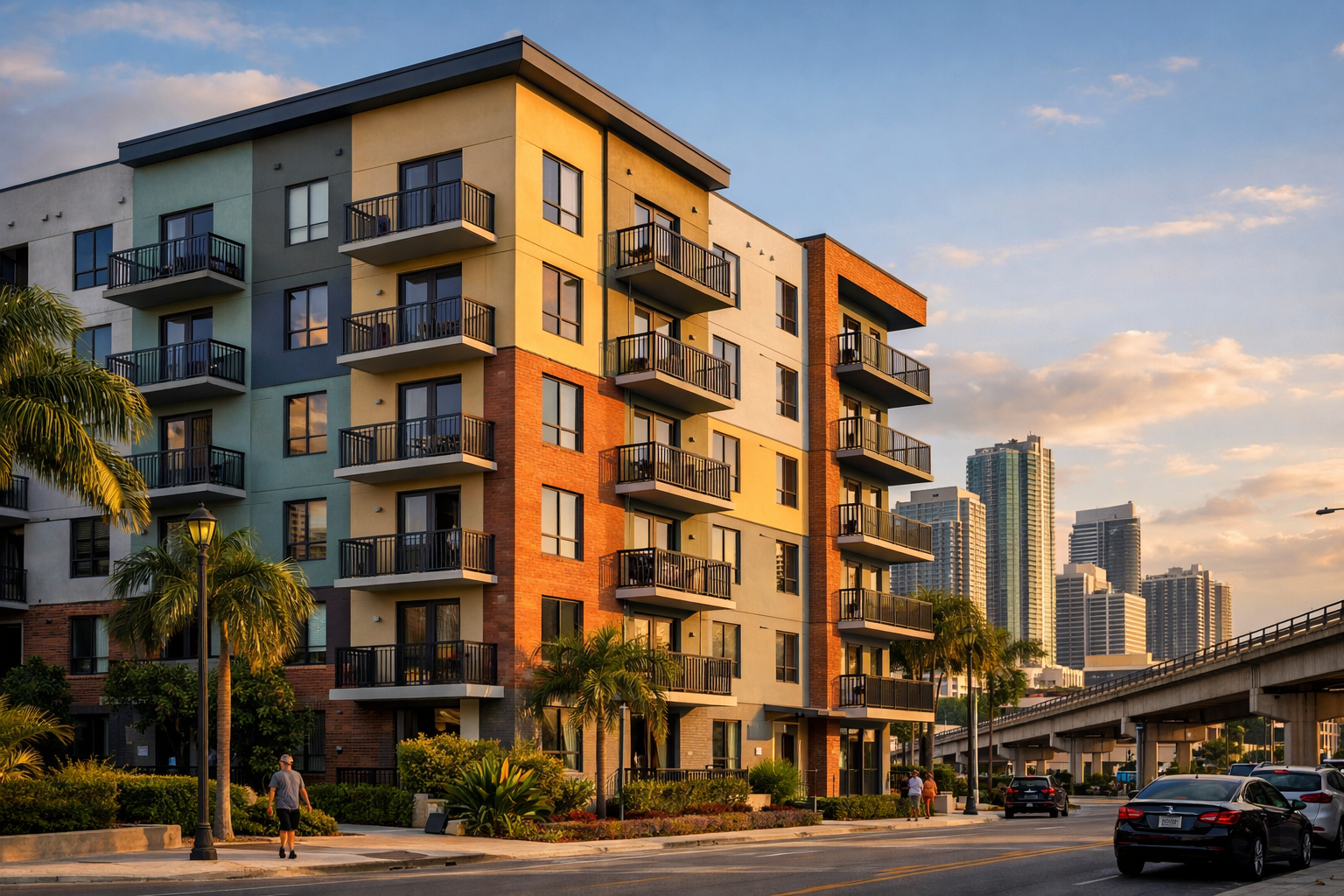
Should You Sell Your Miami-Dade Rental Property in 2026?
Should you sell your Miami-Dade rental property in 2026?
For most Miami-Dade landlords, the honest answer comes down to insurance and financing costs, not rent growth. If your break-even cash flow analysis shows insurance, property taxes, and financing eating more of your rental income than they did two years ago — and refinancing won't fix it — selling or executing a 1031 exchange usually beats holding on hope that costs come back down. Run the numbers before your next renewal or maturity date forces the decision for you.
By Pedro Casanova | August 10, 2026
Miami-Dade landlords are asking this question more often in 2026, and it's not really about rents. It's about what's left over after the insurance bill.
Why This Question Is Everywhere Right Now
Rental income in Miami-Dade has held up reasonably well. Rent growth has flattened in some segments, but it hasn't collapsed. What's changed is everything below the rent line.
Coastal Miami-Dade properties are now running $2,200 to $2,800 per unit annually in insurance, roughly double what inland properties pay. Landlords across the county have watched policies that cost $2,500 a year in 2022 climb past $4,000. Industry underwriters are blunt about the effect: higher insurance eats into net operating income directly, and because owners typically pass through only 25 to 40 cents of every dollar of increase to rent, the rest comes straight out of your margin. That pressure pushes cap rates wider and pushes some owners to sell rather than inject new equity at their next refinance.
Here's the part most owners miss. If you've seen headlines about Florida's 2026 insurance market "stabilizing," that's real — but it's not necessarily your headline. Citizens Property Insurance cut personal-lines (HO-3, owner-occupied) rates by an average of 8.7% statewide for 2026, with Miami-Dade seeing a 14% average decline across roughly 42,000 policyholders. That's genuinely good news for homeowners. But landlord dwelling-fire policies (DP-3) didn't get the same treatment — Citizens actually raised DP-3 rates 10.4% in its 2025 filing, even as HO-3 rates were softening. If you're a landlord assuming the good insurance news applies to you, check your actual renewal before you count on it.
Add in property tax reassessment (Miami-Dade reassesses all 1.09 million parcels annually, and losing homestead status on a property you've converted to a rental removes the Save Our Homes cap protection), rising HOA and condo association fees, and 30-year rates that were still averaging 6.7% in mid-2026, and you can see why more owners are running the sell-or-hold math this year than in the last several combined.
Run the Break-Even Math Before You Decide
Before you decide anything, separate two different kinds of "break-even" — they answer different questions.
Monthly cash-flow break-even asks whether your collected rent, minus operating expenses and debt service, is positive right now. Take your monthly rental income and subtract:
- Mortgage principal and interest
- Insurance (get your actual current premium, not last year's)
- Property taxes
- HOA or condo association dues, including any special assessments
- Property management, maintenance reserve, and vacancy allowance
If that number has gone negative, or dropped close to zero compared to two years ago, that's your signal that costs — not rent — are driving the decision.
Equity break-even asks a longer question: at what point does your cumulative cash flow return your original investment? This matters because a property that barely breaks even today can still make sense if you expect it to cash flow meaningfully in five years as rents catch up and your mortgage payment stays fixed. The trap is assuming that will happen without checking whether your specific submarket supports it.
As a reference point, a healthy Miami-Dade cap rate in 2026 runs 4 to 6% for core residential assets, 3.5 to 4.5% for luxury condos in Brickell, Edgewater, and Downtown, and 5.5 to 8.5% for value-add properties in submarkets like Hialeah, Little Havana, and North Miami. Anything running noticeably above that range usually has a reason attached to it — deferred maintenance, below-market leases, an unresolved milestone inspection or structural integrity reserve study (SIRS) issue, or a management problem. If your property's real numbers, insurance included, land it in that "there's a reason" territory, that's worth a hard look.
Your Three Real Options: Hold, Sell, or 1031 Exchange
Once you've run the numbers, you're choosing between three paths.
Hold. This makes sense if your cash flow is still positive after honestly updated insurance and tax figures, if you have room to shop your policy with other carriers before your next renewal, and if your equity break-even timeline still looks reasonable. Actively shopping your insurance across multiple carriers at renewal, rather than accepting the auto-renewal quote, is currently the single biggest lever landlords have on cost.
Sell outright. If the numbers don't work and you don't need to redeploy the proceeds into another investment property, a straight sale converts your equity to cash. Keep in mind the costs: documentary stamp tax ("doc stamps") runs $0.60 per $100 of consideration in Miami-Dade, plus a $0.45 per $100 surtax on properties other than single-family homes, and you'll owe federal capital gains tax on the gain — up to 20%, plus the 3.8% Net Investment Income Tax if you're a high earner. Florida has no state income or capital gains tax, which is one advantage you keep either way.
1031 exchange. If you still want investment real estate exposure but want out of this specific property's cost structure, a 1031 exchange defers that federal capital gains tax by rolling your proceeds into a replacement property. The clock is strict: you have 45 days from closing to identify replacement property in writing, and 180 days total to close on it, using a qualified intermediary to hold the funds throughout. This is how owners in an aging Miami-Dade condo with a looming special assessment often reposition into a newer building, a different submarket, or even a different property type without triggering a tax bill on the way.
There's no version of this decision where the "right" answer is the same for every owner. It depends on your basis, your timeline, your appetite for another Florida property versus diversifying elsewhere, and how close you are to a refinance or renewal deadline that will force the question anyway.
What This Looks Like By Property Type
The math plays out differently depending on what you own.
- Condos in insurance-exposed buildings: If your association is mid-SIRS compliance or facing a milestone inspection report, factor in the risk of a special assessment on top of your own insurance renewal. This is the profile most likely to tip toward selling now rather than after an assessment hits.
- Single-family rentals inland (West Kendall, Cutler Bay, Homestead): Generally facing lower insurance pressure than coastal or high-rise properties, and often still cash-flowing. These are more likely "hold and shop your policy" candidates.
- Coastal or waterfront-adjacent units: Highest insurance exposure, and the segment where the DP-3 versus HO-3 distinction matters most. Worth a real conversation before your next renewal notice arrives.
Every situation is different, and the only way to know for sure is to run your specific numbers with someone who tracks this market closely — not a generic calculator.
Frequently Asked Questions
How much has landlord insurance gone up in Miami-Dade?
Landlord insurance premiums across Florida have risen 30% to 50% year-over-year in recent reporting, with Miami-Dade coastal properties running $2,200 to $2,800 per unit annually — roughly double the cost of comparable inland properties.
Does the 2026 Citizens Property Insurance rate cut help rental property owners?
Not necessarily. Citizens' 8.7% average 2026 rate cut applies to personal-lines (HO-3) homeowners policies, and Miami-Dade specifically saw a 14% average decline. Landlord dwelling-fire (DP-3) policies are a separate rating class — Citizens actually raised DP-3 rates 10.4% in its 2025 filing even as HO-3 rates softened, so check your specific renewal rather than assuming the good news applies.
What's a good cap rate for a Miami-Dade rental property in 2026?
Core residential assets are running 4% to 6%, luxury condos in Brickell and Edgewater are trading at 3.5% to 4.5%, and value-add properties in submarkets like Hialeah and North Miami range from 5.5% to 8.5%. Cap rates noticeably above that range usually signal deferred maintenance, below-market leases, or an unresolved condo compliance issue.
How long do I have to complete a 1031 exchange on a Florida rental property?
You have 45 days from the closing of your relinquished property to identify replacement property in writing, and 180 days total to close on the replacement, both starting the day after your sale closes. A qualified intermediary must hold the proceeds throughout — you can't touch the money yourself without disqualifying the exchange.
Will I owe capital gains tax if I sell my Miami-Dade rental property?
Florida doesn't levy a state income or capital gains tax, but you'll still owe federal capital gains tax on your profit — up to 20%, plus the 3.8% Net Investment Income Tax if your income is high enough to trigger it. A 1031 exchange defers that federal tax if you reinvest in another qualifying property within the required timelines.
If you're weighing whether to sell, hold, or exchange a Miami-Dade rental property, the numbers are specific to your insurance renewal, your basis, and your timeline — not a national average. I offer a free buying or selling strategy session to walk through exactly that, no pressure, just a straight conversation about where you stand and what your options actually are. You can grab a time here.
About Pedro Casanova
Pedro Casanova is a real estate broker that leads The KREN Group real estate team serving the Southeast Florida area. They specialize in helping people build wealth through real estate by helping buyers and sellers maximize their opportunity in every transaction. Connect with the team at www.thekrengroup.com.
The KREN Group | Keller Williams Premier Properties
Pedro Casanova
| The KREN Group | Keller Williams Premier Properties | PLACE
or another way