
Categories
Condo Loans, Homeownership, Buying a homePublished October 2, 2026
What Happens If a Miami Condo Association Denies You?

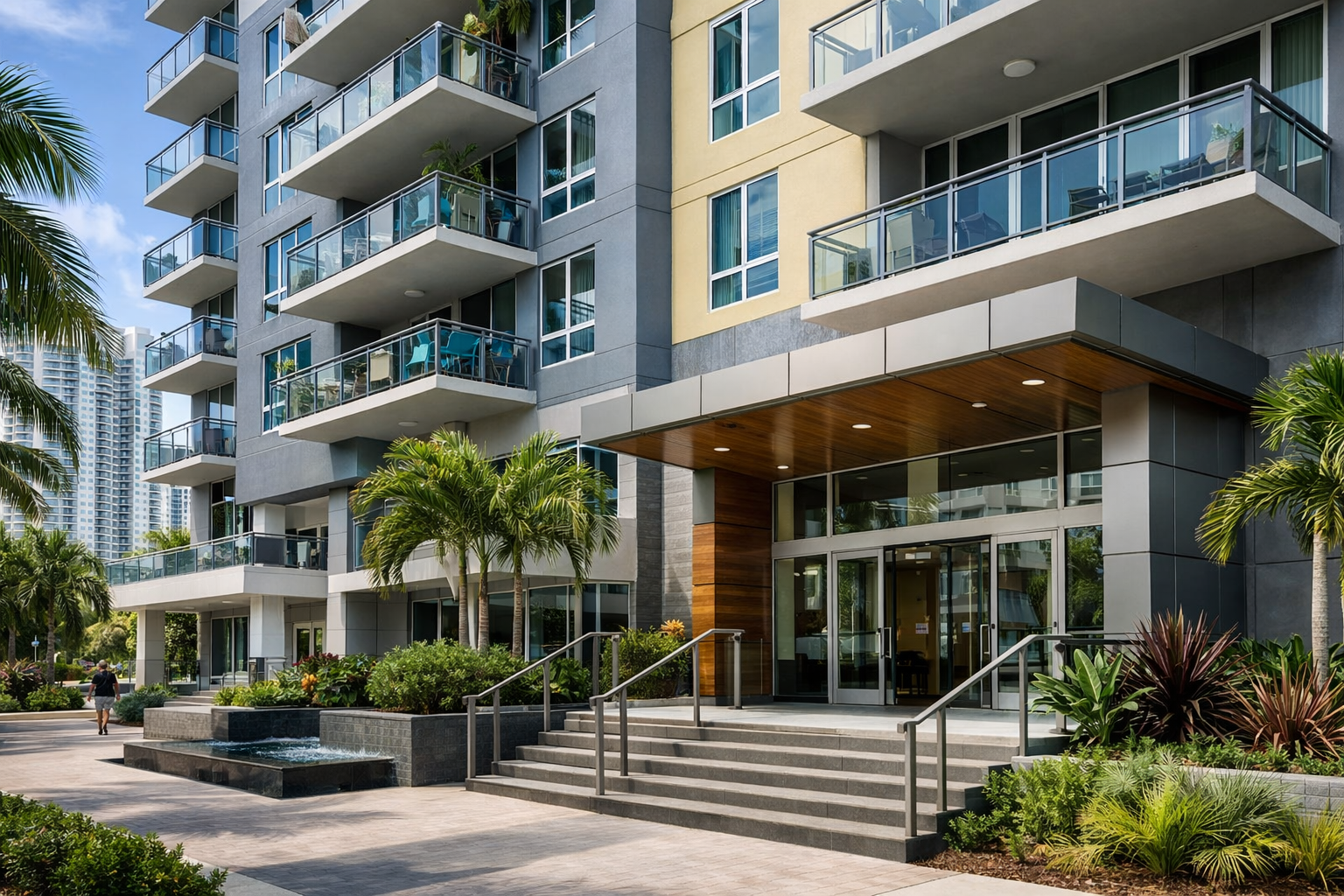
What happens if a Miami-Dade condo association denies your purchase application?
If the association denies you within the time your contract allows — and you applied promptly and made a diligent effort — the contract terminates and your deposit is refunded. Under the Florida Realtors/Florida Bar Condominium Rider (CR-7), the sale is contingent on association approval, and the default deadline is 5 days before closing. The risk is not the denial itself; it's missing the application deadlines, which can leave you in default instead of protected.
By Pedro Casanova | September 9, 2026
You're under contract on a condo in Brickell, Kendall, or Doral. The inspection went fine, your lender is moving, and then someone mentions the board still has to approve you.
That's the moment most Miami-Dade buyers realize they've been watching the wrong gatekeeper.
A condo purchase here has two approvals, not one. Your lender approves you. The association approves you. They run on separate clocks, and the second one is the one nobody walks you through.
Here's the part that should lower your blood pressure: handled correctly, a denial does not cost you your deposit. The Condominium Rider attached to almost every Miami-Dade condo contract makes the sale contingent on your approval. If you aren't approved in the stated time period, the contract is terminated and you get the deposit back — provided you held up your end, which is the catch worth understanding.
What actually costs buyers money is the paperwork — missing a deadline, sitting on an application for two weeks, or waiving a document window they didn't know existed. That's the real exposure, and it's entirely avoidable.
The approval clock starts five days after you sign
The current Condominium Rider (CR-7, revised June 2025) sets defaults that apply whenever the blanks are left empty — and in practice, they're left empty a lot.
- Within 5 days after the effective date, the seller has to start the approval process with the association and hand you a copy of the current application.
- You have to apply promptly once you have it.
- The contract is contingent on approval no later than 5 days before closing.
- Both sides have to sign whatever the association requires and use diligent effort to get approved — including making personal appearances if the board asks for one.
Read that last line again, because it's the one that trips people up. "Diligent effort" is a contractual obligation, not a suggestion. A buyer who ignores emails from the management company, skips the interview, or submits half an application isn't protected by the denial clause — they're arguably the one in default.
The other thing worth knowing: Florida law doesn't set a universal deadline for the board to decide. Chapter 718 lets the declaration govern transfer approval, so the timeline lives in that specific building's documents. Some boards decide in ten days. Some take five weeks because the screening committee meets monthly and quorum is a problem.
This is why I ask for the application and the association's stated turnaround before we write the offer, not after. On a building with a slow board, a 30-day closing date is a promise you can't keep.
What a board can actually hold against you
Associations in Miami-Dade screen hard. Expect a credit check and a criminal background check, and expect the application packet to ask for more than your lender did — tax returns, personal financial statements, bank and employment reference letters, sometimes photos of your pets and your vehicles. Most buildings require an interview, in person or by phone.
But the board's discretion has real limits:
- The power to approve has to come from the governing documents. If the declaration doesn't grant transfer approval, the association generally can't insert itself into your sale.
- Screening can't be arbitrary. Florida case law holds associations to a reasonableness standard — a board applying a criterion it never disclosed, or applying one selectively, is on weak ground. Many declarations also require the criteria to be published.
- You should get the decision in writing. Most well-run buildings state the grounds for a denial. Chapter 718 doesn't expressly require it on a purchase application, but a denial with no stated basis is exactly the kind that gets challenged.
- Fair Housing applies. A denial can't be based on protected characteristics — including, but not limited to, race, color, religion, sex, national origin, familial status, and disability. Miami-Dade's Human Rights Ordinance reaches further than federal law, adding categories such as sexual orientation, gender identity, age, marital status, and source of income.
- The fee is capped. Under Florida Statutes 718.112(2)(k), an association can only charge a transfer or approval fee if it's required to approve the transfer and the fee is authorized in the declaration, articles, or bylaws — and it may not exceed $150 per applicant. Spouses, or a parent and dependent children, count as one applicant. That cap is adjusted for inflation every five years by the DBPR, with the next adjustment due in 2027.
If you're handed an invoice for a $600 "application and processing fee," that's worth a conversation. Miami condo associations have been sued — successfully — over fees charged above the statutory cap, though the well-known cases involved lease application and move-in fees rather than purchase applications.
There's also a separate mechanism people confuse with approval: the right of first refusal. If the declaration grants one, the association — or in some buildings, its members — can step into your contract and buy the unit on your exact terms. It's rare. Boards generally don't want to spend the association's money and then resell a unit. If it happens, the contract terminates and your deposit is refunded. Worth noting for sellers: the June 2025 revision struck the old clause that automatically obligated the seller to pay a full commission in that scenario, so compensation now follows whatever agreements the parties actually signed.
The document windows most buyers waive without knowing
This is where the 2025 rider changes matter, and where I see the most money left on the table.
The 7-day voidability window. Under Section 718.503, as amended effective July 1, 2025, you can cancel within 7 days — excluding Saturdays, Sundays, and legal holidays — after signing and receiving the declaration, articles, bylaws, rules, the most recent year-end financial statement and annual budget, and the association's FAQ document. That window used to be 3 days. It's now 7, and any purported waiver of it has no effect.
The second 7-day window almost nobody uses. The revised rider added a request list. At the seller's expense, you can ask for:
- Board meeting minutes and agendas for the 12 months before the effective date
- Member meeting minutes and agendas for the same period
- Insurance declaration pages for the general liability, hazard/windstorm, and any flood policies the association carries
- The milestone inspection summary, turnover inspection report, or structural integrity reserve study, if the seller receives one before closing
Once you've received everything you asked for, you have 7 days (again excluding weekends and legal holidays) to terminate. Twelve months of board minutes will tell you more about a building's financial trajectory than any disclosure form — that's where the assessment conversations happen before they become a special assessment you inherit.
Ask for those boxes. Unlike the statutory disclosures, this is a negotiable request a seller can push back on in a counteroffer — but it's the strongest diligence tool in the contract, and most sellers agree to it without a fight.
The estoppel certificate. Your title company will order one. Under 718.116(8), the association has to deliver it within 10 business days, and the fees are capped — currently $299, plus up to $119 more to expedite delivery inside 3 business days, plus up to $179 more if the seller is delinquent. Those stack, so a rushed request on a delinquent unit is not a $299 line item. The certificate is good for 30 days when delivered by hand or email, 35 if it comes by regular mail, and it's what confirms what's actually owed on the unit at closing.
Who pays for assessments is worth reading closely. Under the current rider, if the association has levied a special or additional assessment as of the effective date — or levies one after, before closing — the default is that the seller pays it in full at or before closing. One carve-out matters: where the assessment is payable in installments and the association will let you assume them, the default flips, and the buyer picks up the installments due after closing. Those are checkboxes. Know which way yours are pointed before you sign.
Where this leaves you
Miami-Dade's condo market is giving buyers room right now. The county's existing condo median was $400,000 in July 2026, down about 1.5% year over year, with a median 86 days from listing to contract — up from 65 a year earlier. Worth knowing the other half of that picture: condo inventory has been declining month over month, which MIAMI REALTORS reads as eventual upward pressure on prices. So the room you have is real but not permanent.
Either way, leverage in a condo deal is mostly the ability to walk away cleanly, and that ability lives in deadlines, not in negotiation.
Every building screens differently. The timeline that matters is the one in that declaration, not the one in a general article. That's the piece I pull before we write an offer, so the closing date we agree to is one the board can actually meet.
Frequently Asked Questions
Can a Miami condo association reject me for a low credit score?
Often yes, where the declaration grants approval authority and a minimum score sits in the governing documents or board-adopted screening criteria applied consistently. Florida law sets no universal minimum. A board applying a standard it never disclosed, or applying it selectively, is on much weaker footing if challenged.
Do I get my deposit back if the board denies me?
Under the Condominium Rider, yes — if you aren't approved within the stated time period, the contract terminates and the deposit is refunded. The protection depends on you having applied promptly and used diligent effort, including attending an interview if one is required. A buyer who stalls the application can lose that protection.
How much can a condo association charge for a purchase application?
No more than $150 per applicant under Florida Statutes 718.112(2)(k), and only if the association is required to approve the transfer and the fee is authorized in the declaration, articles, or bylaws. Spouses, or a parent and dependent children, count as a single applicant. The cap is adjusted for inflation every five years.
How long does condo approval take in Miami-Dade?
There's no statutory deadline — the declaration controls, and turnaround ranges from about ten days to more than a month depending on how often the screening committee meets. Ask for the association's stated timeline before you agree to a closing date, not after.
What is a right of first refusal, and can it take the unit away from me?
It's a provision in some declarations letting the association or its members purchase the unit on the same terms as your contract. If it's exercised, the contract terminates and your deposit is refunded. Boards rarely use it, because the association then has to fund the purchase and resell the unit.
Before you write the offer
A condo denial isn't the disaster buyers imagine — the contract is built to give you your deposit back. The expensive mistakes are quieter: a closing date the board was never going to meet, an application that sat for two weeks, a document request box left unchecked.
If you're looking at a Miami-Dade condo and want someone to pull the association's approval timeline, screening criteria, and last twelve months of minutes before you commit to anything, I offer a free buying or selling strategy session — no pressure, just a straight read on the building and where you stand. You can grab a time here.
If you're earlier in the process and still working out the numbers, start with what a first home in Miami-Dade actually costs, then come back to the building-specific questions.
This article explains how the standard Florida contract forms and the Condominium Act generally work in Miami-Dade transactions. It isn't legal advice, and your declaration of condominium may say something different. For a question specific to your building or your contract, talk to a Florida real estate attorney.
About Pedro Casanova
Pedro Casanova is a real estate broker that leads The KREN Group real estate team serving the Southeast Florida area. They specialize in helping people build wealth through real estate by helping buyers and sellers maximize their opportunity in every transaction. Connect with the team at www.thekrengroup.com.
The KREN Group | Keller Williams Premier Properties

Pedro Casanova
| The KREN Group | Keller Williams Premier Properties | PLACE
or another way