
Categories
Homeownership, Neighborhood GuidesPublished August 21, 2026
What Relocating to Miami-Dade Really Costs Beyond the Mortgage

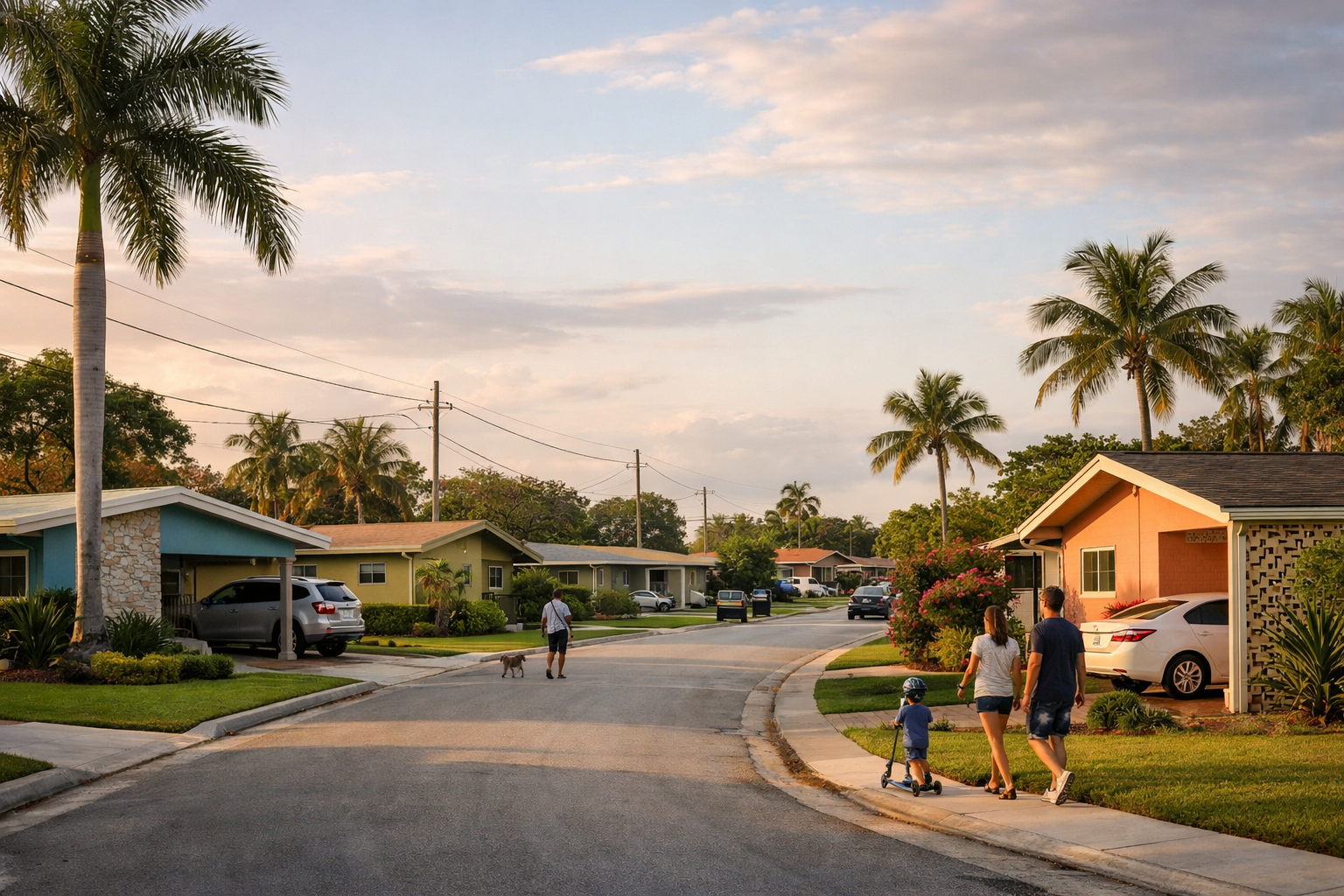
What Relocating to Miami-Dade Really Costs Beyond the Mortgage
What does it actually cost to own a home in Miami-Dade if you're relocating from another state?
Beyond the mortgage, budget for homeowners insurance (commonly $3,500–$8,000+ a year, more on the coast or with an older roof), HOA dues if you're buying a condo or townhome (Miami-Dade high-rise fees have climbed past $1,900 a month at the median), and a first-year property tax bill based on full market value, since you won't have Florida's homestead protections yet. Together, these can add $10,000 to $20,000 or more a year beyond what a mortgage calculator shows — which is why so many relocators feel blindsided in year one. Watch the full breakdown in this youtube video.
By Pedro Casanova | August 12, 2026
If you're moving to Miami-Dade from out of state, there's a good chance you've already run the mortgage numbers a dozen times. What trips people up isn't the mortgage. It's everything sitting next to it.
I talk to relocators every month who did the math on the loan, the down payment, even the closing costs — and then got hit with an insurance quote or a tax bill that didn't match anything they'd budgeted for. It's such a common pattern right now that it's worth walking through before you write an offer, not after you close.
Insurance Is the Line Item That Surprises Almost Everyone
Florida has carried some of the highest homeowners insurance premiums in the country for years, and Miami-Dade sits near the top of that list because of its coastal exposure. Depending on the home's age, roof condition, and distance from the water, you're commonly looking at $3,500 to $8,000 a year — and coastal or older-roof properties can run well past $10,000.
There's genuinely good news for 2026, though. Following Florida's tort reform legislation, Citizens Property Insurance approved an average 14% rate reduction for roughly 42,000 Miami-Dade policyholders, effective at renewal starting June 1, 2026. More private carriers have also re-entered the market, which means you now have real options beyond Citizens if you shop around.
A few things worth doing before you close:
- Get an actual insurance quote on the specific property, not a generic estimate, before your inspection period ends. Roof age and construction type move the number more than almost anything else.
- Schedule a wind mitigation inspection. It typically runs $100–$200, and it can unlock meaningful premium credits for hurricane straps, impact windows, and roof-to-wall connections. These reports don't transfer from the seller, so you have to order your own — and most out-of-state buyers don't know to ask.
- Ask about flood zone designation separately from wind coverage. They're two different policies, and a home outside the highest-risk flood zone can still carry a meaningful premium if it's near a canal or low elevation.
Your First Property Tax Bill Won't Look Like the Seller's
Here's the part that catches almost every relocator off guard: Florida's Save Our Homes cap, which limits how much a homesteaded property's assessed value can rise each year, only applies once you've established the property as your permanent Florida residence and filed for homestead exemption. Until then, the property is reassessed to full market value the January after you close, and it stays uncapped in that first year.
After that, non-homestead properties are protected by a separate 10% annual assessment cap. Florida voters will decide this November on Amendment 3, a proposed constitutional change that would lower that non-homestead cap to 5% starting January 1, 2027, if it passes with the required 60% approval. It hasn't passed yet, so don't build your budget around it — but it's worth knowing it's on the ballot if you're planning your purchase timeline around 2026 or 2027.
Once you do establish Florida residency and file for homestead exemption, you'll get:
- A reduction in your home's taxable value
- Protection against future assessment increases beyond 3% a year or the rate of inflation, whichever is lower
- Eventually, portability, if you ever move up within Florida again
Until then, run your first-year tax estimate off the home's likely reassessed market value, not the current owner's tax bill. Those two numbers can be thousands of dollars apart.
If You're Buying a Condo, HOA Dues and Assessments Change the Math
Condos and townhomes add another layer entirely. Miami-Dade high-rise HOA fees have climbed to a median north of $1,900 a month in many buildings, largely driven by insurance costs and the structural inspection requirements Florida put in place after the 2021 Surfside collapse.
Buildings three stories or taller now have to complete structural inspections and structural integrity reserve studies on a set schedule, and associations that haven't funded reserves adequately have been passing along special assessments — some in the tens of thousands of dollars per unit, occasionally more.
Before you buy into any association, get:
- The most recent estoppel letter, which spells out exactly what's owed on the unit
- The building's reserve study and a copy of any special assessments approved or pending a vote
- At least two years of HOA financials and board meeting minutes
- Confirmation of the building's milestone inspection and SIRS status if it's an older structure
None of this shows up in the listing price. It shows up in your monthly carrying cost and, sometimes, in a single large bill after you've already closed.
How to Build the Real Number Before You Buy
Every relocator's situation is different — the math changes based on whether you're buying a single-family home or a condo, whether you'll establish Florida residency right away, and how sensitive your budget is to a swing of a few hundred dollars a month. That's exactly the kind of question worth running with someone who works in this market every day, before you're locked into an offer.
If you're still deciding whether to rent for a few months first or buy right away, that's also a reasonable question to ask — many relocators find their neighborhood preference shifts once they've actually lived in Miami-Dade for a season. Either way, the goal is the same: know your real number before you're under contract, not after.
Frequently Asked Questions
How much does homeowners insurance cost for a new buyer in Miami-Dade? Most buyers should budget $3,500 to $8,000 a year, with coastal properties or homes with older roofs running higher, sometimes well past $10,000. Citizens Property Insurance cut rates an average of 14% for about 42,000 Miami-Dade policyholders starting at renewal on June 1, 2026, and more private insurers have re-entered the market, so it's worth getting quotes from a few carriers before you close.
Why is my first property tax bill higher than what the seller was paying? The seller's tax bill likely reflected a homestead exemption and Save Our Homes assessment cap built up over years of ownership. When the property sells, it's reassessed to full market value for the following tax year, and you won't have those protections until you establish Florida residency and file for your own homestead exemption.
When do I get Florida's homestead exemption and Save Our Homes cap? You can apply for homestead exemption once the property is your permanent Florida residence, generally by the following March 1 deadline after you move in. The Save Our Homes cap, which limits future assessment increases, begins accruing once your exemption is in place — it doesn't apply retroactively to your first year of ownership.
Should I rent in Miami-Dade for a while before buying? It depends on how confident you are in the neighborhood and budget, but many real estate professionals recommend six to twelve months of renting for out-of-state relocators, specifically to get a real read on insurance costs, commute patterns, and neighborhood fit before committing. If your timeline or job requires buying right away, that's workable too — it just means leaning harder on inspections and quotes before you're under contract.
What should I ask for before buying a Miami-Dade condo? Request the estoppel letter, the building's reserve study, at least two years of HOA financials, and documentation of the building's milestone inspection and structural integrity reserve study (SIRS) status if it's an older building. These documents reveal pending special assessments and funding gaps that don't show up in the listing itself.
If you want to run these numbers for your own situation, I offer a free buying or selling strategy session — no pressure, just a straight conversation about where you stand and what your options are as you plan a move into Miami-Dade. You can grab a time here: https://calendly.com/pedro-place/realestateconsultation
About Pedro Casanova Pedro Casanova is a real estate broker that leads The KREN Group real estate team serving the Southeast Florida area. They specialize in helping people build wealth through real estate by helping buyers and sellers maximize their opportunity in every transaction. Connect with the team at www.thekrengroup.com.
The KREN Group | Keller Williams Premier Properties

Pedro Casanova
| The KREN Group | Keller Williams Premier Properties | PLACE
or another way