Published July 27, 2026
Workforce Housing Proposed Along Hialeah Metrorail Could Expand Transit-Oriented Living

Workforce Housing Proposed Along Hialeah Metrorail Could Expand Transit-Oriented Living
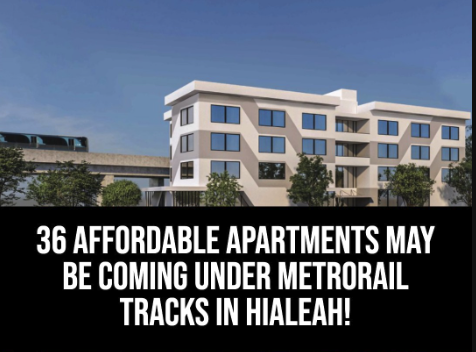
As South Florida continues searching for solutions to its housing affordability challenges, a new proposal in Hialeah demonstrates how underutilized public land can help create much-needed workforce housing. Pine Development has proposed a residential project adjacent to the Hialeah Metrorail corridor that would provide attainable housing while encouraging transit-oriented development in one of Miami-Dade County's busiest communities.
The proposal calls for a four-story apartment building with 36 workforce housing units on approximately one acre of Miami-Dade County-owned land located beneath and alongside the elevated Metrorail tracks near East Fourth Avenue in Hialeah. Rather than purchasing the land outright, Pine Development is seeking a 99-year ground lease with Miami-Dade County, an arrangement that would allow the county to retain ownership while generating an estimated $21 million in lease revenue over the life of the agreement.
One of the most attractive aspects of the proposal is its location. Transit-oriented developments are becoming increasingly important throughout South Florida because they place residents within walking distance of public transportation. Living near the Metrorail allows residents to commute to Downtown Miami, the Health District, Brickell, and other major employment centers without relying solely on a personal vehicle. This can reduce commuting costs, ease traffic congestion, and provide greater transportation flexibility.
The development is specifically targeted toward workforce housing, a segment of the market designed for individuals and families who earn too much to qualify for traditional affordable housing but still struggle to afford market-rate rents. These residents often include teachers, healthcare workers, first responders, hospitality employees, municipal workers, and other essential professionals who help keep South Florida's economy running.
As housing prices and rental rates continue to rise across Miami-Dade County, workforce housing has become one of the region's most pressing needs. Projects like this help bridge the affordability gap while allowing essential workers to live closer to their jobs and the communities they serve. Similar workforce housing developments have become increasingly common throughout Miami-Dade under recent state and local housing initiatives.
The proposal also reflects a broader trend in urban planning: maximizing the use of publicly owned land. Rather than leaving small parcels underutilized, local governments are exploring opportunities to partner with private developers to create housing while maintaining public ownership. These partnerships can produce long-term revenue for taxpayers while helping address critical housing shortages.
At the same time, the proposal has generated discussion because the site overlaps with the city's long-term vision for the Hia-Line, a planned linear park inspired by Miami's popular Underline project. Hialeah officials have expressed concerns about ensuring the future park remains viable, while Pine Development has stated that its design would preserve sufficient space to accommodate both the housing development and the future greenway. County documents would require the developer to cooperate with the Hia-Line if it moves forward.
Before construction can begin, the proposal must receive approval from Miami-Dade County. Officials will review the lease terms, site design, compatibility with future public improvements, traffic considerations, and other planning factors before making a final decision. Public input will also play an important role as the proposal advances through the review process.
For Hialeah, this project represents more than just another apartment building. It demonstrates how creative land use, public-private partnerships, and transit-oriented development can work together to address one of South Florida's greatest challenges—providing attainable housing for the workforce that keeps the region thriving.
As Miami-Dade continues to grow, proposals like this highlight an important reality: the future of housing will increasingly depend on making smarter use of existing land, expanding access to public transportation, and creating communities where people can live, work, and commute more efficiently. If approved, this workforce housing development could become another example of how thoughtful planning can benefit both residents and the community as a whole.