
Categories
Buying a home, Selling a Home, Pricing StrategyPublished September 16, 2026
Can You Insure That Miami-Dade House? Check the Roof First

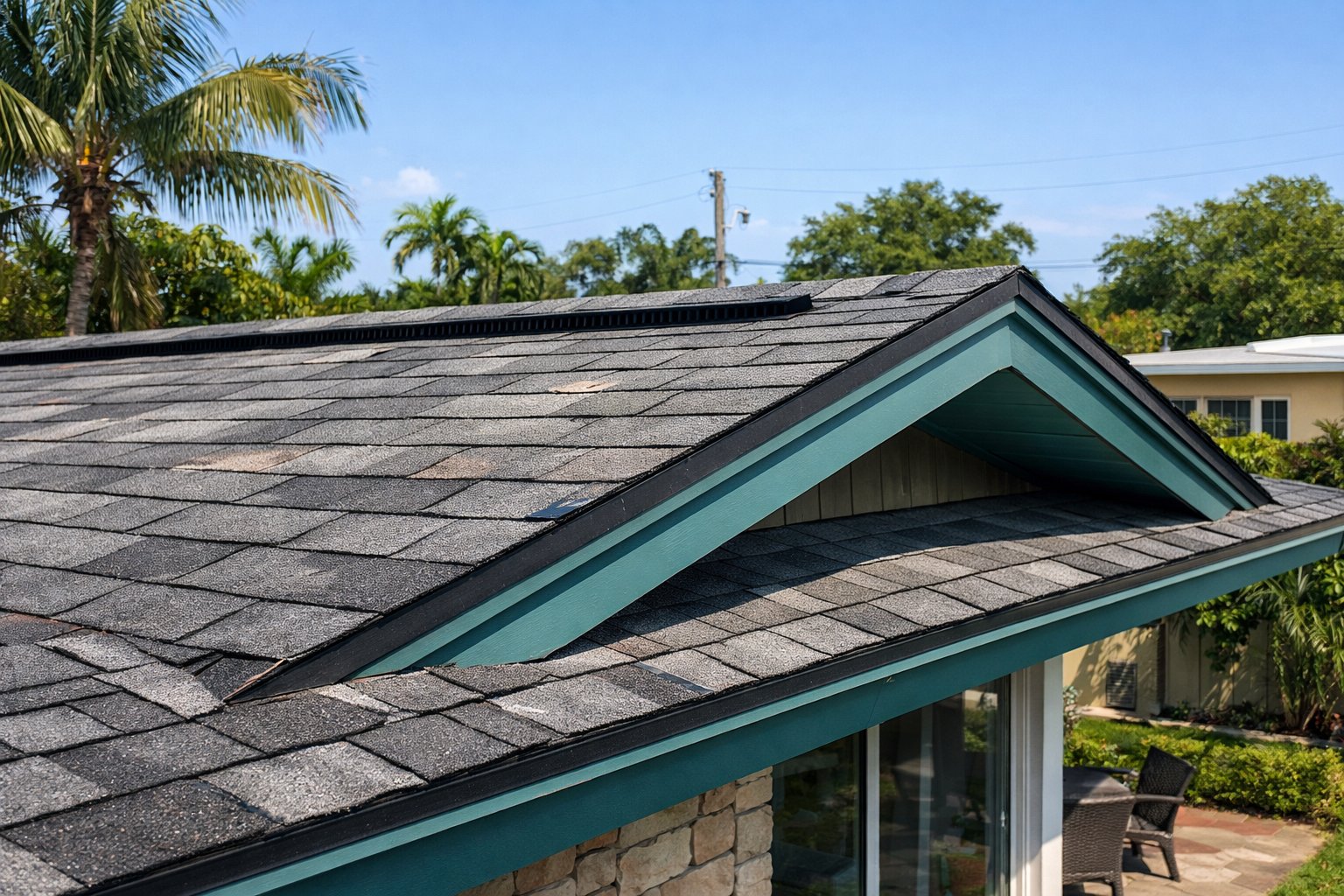
How do you know if a Miami-Dade house can be insured before you close?
Get a property-specific insurance quote inside your inspection period — not after. Florida carriers began flagging asphalt shingle roofs at 15 years in 2026, down from 20, and a house you can't insure is a house you can't finance. Under the standard FR/BAR AS IS contract, insurance is not a contingency, so your inspection period is the only window where walking away still returns your deposit.
By Pedro Casanova | August 31, 2026
The number that kills Miami-Dade deals in 2026 isn't the sale price. It's the insurance quote — and most buyers don't ask for one until the loan is already in underwriting.
Here's the sequence I watch play out. A buyer gets pre-approved using an estimated insurance figure — a placeholder, because nobody has shopped a real policy for a house nobody had picked yet. They go under contract. Inspections come back clean. Then, ten days before closing, the actual quote lands at multiples of the estimate, the debt-to-income ratio breaks, and the loan doesn't clear. Or worse: no carrier will write the house at all.
That's avoidable. But only if you treat insurability as a due diligence item with a deadline, not a formality you handle at the end.
The 15-Year Line That Just Moved
In August 2026, Florida insurers quietly tightened the roof age they're willing to write. Asphalt shingle roofs that used to draw scrutiny at 20 years are now being flagged at 15 — and buyers are finding that competitive quotes disappear the moment a roof crosses that line, even when the roof is in sound condition.
This matters more than it sounds. It isn't a law change. It's an underwriting change, which means it moved without notice and applies unevenly from carrier to carrier.
Florida law does give you a floor. Under Florida Statute 627.7011, an insurer cannot refuse to issue or renew a policy solely because the roof is less than 15 years old. Once a roof reaches 15, the statute still protects you — but you have to act to claim it. The insurer must allow you to obtain a roof inspection from an authorized inspector, at your expense, before it can require replacement as a condition of coverage. If that inspection shows five or more years of remaining useful life, the carrier can't refuse you on roof age alone. Since July 2024, licensed roofing contractors count as authorized inspectors, which widened who can write that report.
Two things to keep straight, because most coverage of this blurs them:
- The statute protects against refusal based on age alone. It does not stop a carrier from declining a roof with active leaks, missing shingles, failed underlayment, or storm damage. Other lawful underwriting criteria still apply.
- Two 2026 bills — HB 815 and SB 808 — would have expanded these protections. Neither passed. The rules you're working with today are the same ones that were in place last year.
Citizens Property Insurance, the state-backed option, sits further out than most people assume. For new applications, Citizens requires documentation of a full roof replacement only when a shingle roof is more than 25 years old, or when a tile, slate, clay, concrete, or metal roof is more than 50 years old — with the same five-year remaining-life exception available for underwriter review. That's a wider door than the private market's 15-year flag. It is not, however, a cheap door, and Citizens carries conditions of its own.
Roof material changes the math too. Tile and metal get considerably more runway than asphalt shingle, and metal tends to draw the better rates.
What Your Inspection Period Actually Protects
This is where Miami-Dade buyers get caught, and where buyers relocating from out of state get caught hardest — because insurability simply isn't a gate in most other states.
The standard Florida Realtors/Florida Bar AS IS contract gives you an inspection period that defaults to 10 days if the parties leave it blank. Inside that window, you can cancel for any reason at your sole discretion and recover your earnest money. That deposit, incidentally, is typically wired into the title company's escrow within three business days of the contract being executed.
Here's the part that surprises people: the AS IS contract does not include an insurance contingency. Financing, appraisal, and inspection are addressed. Insurability is not. If you want a separate right to cancel because you can't obtain coverage on acceptable terms, it has to be negotiated into the contract as an addendum.
Which means that in practice, for most buyers, the inspection period is the insurance contingency. It's the last point at which "I can't insure this affordably" and "I get my deposit back" are the same sentence.
Miss it, and your choices narrow to renegotiating from a weak position, absorbing a premium you never budgeted for, or walking away from the deposit.
The Insurability Check to Run in Week One
Order these on day one or two of your inspection period — not day nine.
- Bundle the 4-point and wind mitigation inspections with your general home inspection. The 4-point covers roof, electrical, plumbing, and HVAC, and it's what determines whether a carrier will write the house at all. Most carriers require one on homes 20 years and older. The wind mitigation report documents hurricane-resistant features and drives your discounts — and it stays valid up to five years absent material changes. Booked together at the same visit, the pair typically runs $180 to $220. It's the cheapest insurance you'll buy all transaction.
- Get the roof's actual age in writing, not the listing's estimate. Permit history is the reliable source. Citizens now retrieves the year of the last roof update automatically through third-party roof data on new applications, so the number you supply gets checked against theirs.
- Take those reports to an independent agent who writes in Miami-Dade and ask for a bindable quote on the actual address. Not a range. And not the seller's declarations page — the seller may hold a legacy policy, a different deductible, or credits tied to their homestead status that won't transfer to you. You want a quote for you, on this property, effective your intended closing date.
- Price the flood question separately. If you're heading to Citizens, note the phase-in: flood coverage has been required on dwellings with Coverage A of $500,000 or more since January 1, 2025, and $400,000 or more since January 1, 2026, and it extends to all Citizens policies on January 1, 2027. Condo unit-owner and tenant contents policies are exempt. NFIP's usual 30-day waiting period is waived when the policy is purchased in connection with a loan closing — but don't treat that as a reason to leave it late.
- Compare the number to your pre-approval's placeholder before the period ends. For context, the average annual homeowners premium in Miami-Dade County runs roughly $6,045, and South Florida quotes commonly land anywhere from $3,500 to $8,000 depending on roof age, wind features, and location. Condo buyers carry a different structure — HO-6 policies average about $2,538 a year here, but the association's master policy reaches you through your dues regardless, which is why pending special assessments belong in the same week-one review.
One piece of real good news: rates are finally moving the right way. Citizens received an average statewide rate decrease of about 8.7% for 2026, with Miami-Dade policyholders seeing an average reduction near 14%, and the Florida Office of Insurance Regulation reported rates declining in 51 of the state's 67 counties this year. That's genuine relief — but it's an average, and averages don't underwrite your specific roof.
If you're already with Citizens or headed there, one more rule worth knowing: under depopulation, you lose Citizens eligibility when a private carrier offers coverage within 20% of your Citizens premium. On a $1,000 Citizens premium, a private offer at $1,200 or less makes you ineligible — and you can't decline the transfer to stay put.
Where this gets genuinely situational is the negotiation. A 16-year-old shingle roof with a clean inspection and five certified years of life left is a very different conversation than a 22-year-old roof with two years left. The first is a quote problem. The second can fail an FHA or VA appraisal outright and stop the deal cold. Whether you ask for a roof credit, a price reduction, replacement before closing, or you walk depends on the report, the comps, and how much competition the seller actually has. With Miami-Dade single-family homes taking a median 52 days to go under contract and condos 85, that leverage question deserves a careful answer rather than a fast one.
That's a conversation I'd much rather have with you on day three of your inspection period than on day nine. If you're still shaping your budget, it pairs closely with what first-time buyers here actually pay at closing.
Frequently Asked Questions
Can a Florida insurer refuse to cover a house just because the roof is old?
Not on age alone. Under Florida Statute 627.7011, a carrier can't refuse to issue or renew based solely on roof age if an authorized inspector certifies the roof has five or more years of remaining useful life. The insurer can still decline for actual condition problems — leaks, missing shingles, failed underlayment, or storm damage.
How long is my inspection period in a Miami-Dade purchase?
The standard Florida AS IS contract defaults to 10 days if the parties don't specify otherwise, though the length is negotiable. Within that window you can cancel for any reason and recover your earnest money. Because insurance isn't a separate contingency in the standard contract, that window is effectively your insurability deadline too.
Should I use the seller's insurance premium to estimate mine?
No. The seller may be carrying a legacy policy, a different deductible, or credits tied to their homestead status that won't transfer to you. Get a bindable quote in your own name for your own closing date — that's the only number that reliably predicts your escrow payment.
When does my lender need proof of insurance?
Most lenders want the binder three to five business days before closing, and in Florida you'll want the carrier locked roughly ten business days out, because roof age and wind mitigation review add underwriting time. Leaving it to the final week is how closings slip.
Does a newer roof lower my premium, or just make me eligible?
Both, and they're separate effects. Roof age largely determines whether a carrier will write you at all; the wind mitigation report determines how much discount you earn on top of that. Two houses with identical roof ages can carry meaningfully different premiums based on documented hurricane-resistant features.
Insurability is a deadline item in Florida, not a closing-week formality. Get a real quote on the real address inside your inspection period and you keep every option open — negotiate, restructure, or walk with your deposit intact. Wait, and the calendar decides for you.
If you're under contract or about to be, and you want a second read on the roof, the quote, and the leverage you actually have, I offer a free buying or selling strategy session — no pressure, just a straight conversation about where you stand. You can grab a time here.
About Pedro Casanova
Pedro Casanova is a real estate broker that leads The KREN Group real estate team serving the Southeast Florida area. They specialize in helping people build wealth through real estate by helping buyers and sellers maximize their opportunity in every transaction. Connect with the team at www.thekrengroup.com.
The KREN Group | Keller Williams Premier Properties

Pedro Casanova
| The KREN Group | Keller Williams Premier Properties | PLACE
or another way