
Categories
Investing in Real Estate, Homeownership, Buying a home, Pricing StrategyPublished October 9, 2026
Flood Insurance in Miami-Dade: What You'll Actually Pay

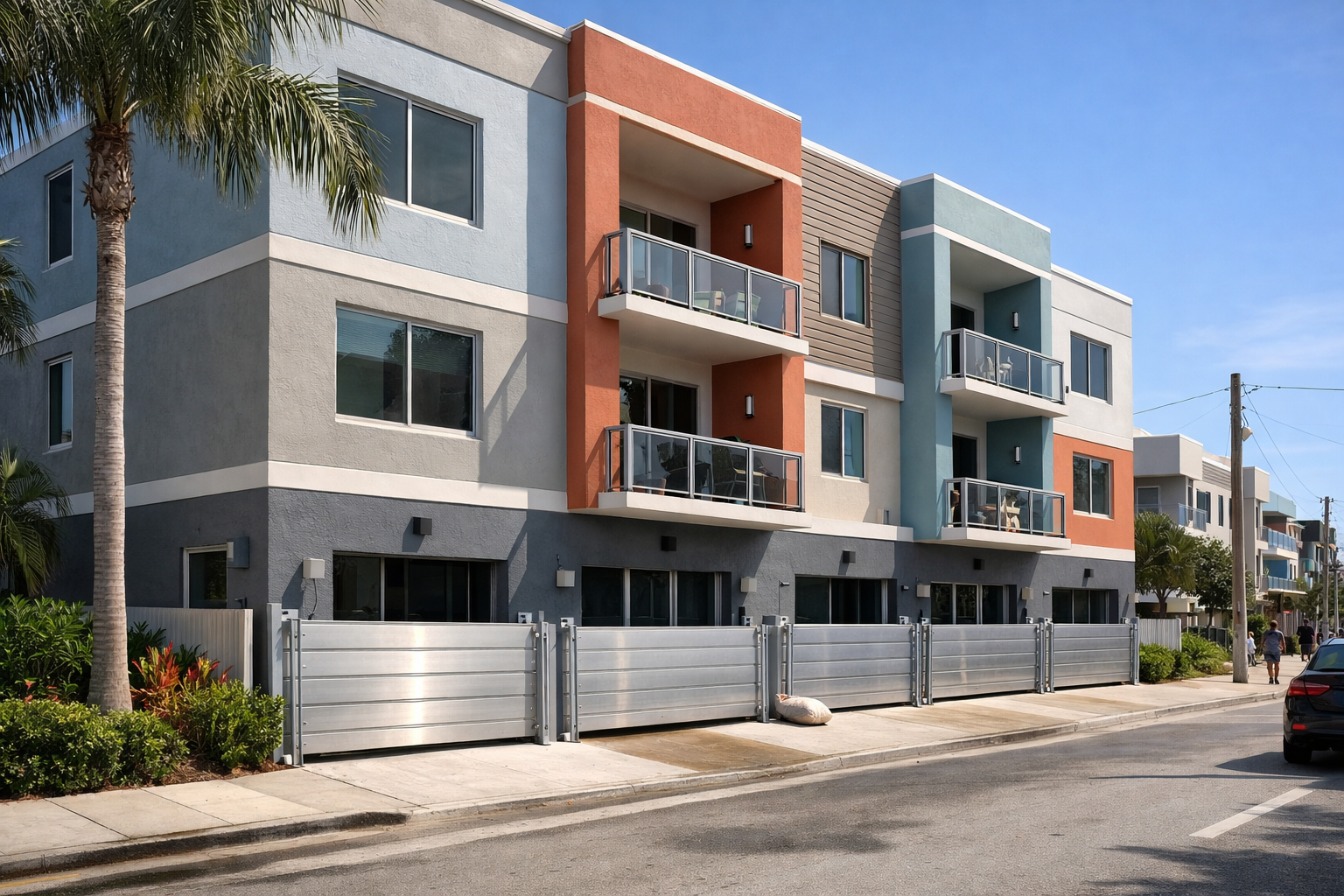
How much is flood insurance in Miami-Dade, and is it required?
Flood insurance in Miami-Dade generally runs from about $700 to $3,000 a year, with higher-risk coastal properties landing well above that. It is required by your lender on any federally backed mortgage if the home sits in a FEMA special flood hazard area — any zone starting with A or V — and it is never included in your homeowners policy. Because the premium is tied to the specific structure rather than the neighborhood, the only way to know your real number is to pull a quote on the exact address during your inspection period.
By Pedro Casanova | September 21, 2026
Here's the mistake I watch out-of-state buyers make more than any other: they budget for the mortgage, the taxes, and the homeowners policy, and they find out about flood insurance eleven days into a fifteen-day inspection period.
Sometimes the number is fine. Sometimes it's $2,800 a year they hadn't planned for, and it moves their debt-to-income ratio enough that the loan gets tighter. By then the clock is most of the way gone.
Flood is the one carrying cost in South Florida that behaves differently from everything else you're used to. It is a completely separate policy from your homeowners coverage — your HO-3 does not cover rising water, period — and it's priced off the building itself, not the ZIP code. Two houses on the same street can quote hundreds of dollars apart because one of them sits eighteen inches higher.
That's frustrating if you want a simple rule of thumb. It's good news if you know how to work it, because almost every lever that lowers the premium is something you can pull before you close.
Start with the flood zone, not the quote
Before you write the offer, look up the zone. It takes about ninety seconds and it frames everything that follows.
Miami-Dade County maintains an interactive flood zone application where you can enter an address, and FEMA's Map Service Center at msc.fema.gov does the same nationally. If the two disagree or the parcel straddles a boundary, the county's Flood Zone Hotline at 305-372-6466 will confirm the official designation.
What you're looking for:
- Zones starting with A or V (AE, AH, AO, VE) are special flood hazard areas. If you're financing with a federally backed loan, coverage is mandatory — not a recommendation.
- Zone X is outside the mandatory purchase area. Your lender probably won't require a policy. That does not mean the property doesn't flood, and it doesn't mean you shouldn't carry coverage.
- The base flood elevation, where one is published, tells you the height the structure is measured against.
One wrinkle worth knowing: Miami-Dade's currently effective Flood Insurance Rate Maps date back to 2009. FEMA published preliminary updated maps for the county and has not yet announced an adoption date. If a property is slated to move from Zone X into a mapped flood zone under the new maps, buying a policy before those maps take effect lets you lock in the more favorable rating — a grandfathering move the county specifically recommends on its own floodplain page.
The second thing to pull is the seller's flood history, and Florida now makes this easier. Under Florida Statute 689.302, sellers of residential property must give you a written flood disclosure at or before contract signing. The law took effect October 1, 2024, and Senate Bill 948 expanded it as of October 1, 2025 — sellers now have to disclose any flooding that damaged the property during their ownership, not just flooding they filed an insurance claim for, plus any assistance they received to repair it, not only federal assistance. Read that form carefully. It is the cheapest due diligence in the transaction.
What the policy actually costs
The honest answer is a range, because the pricing is property-specific.
FEMA replaced flood-zone-based pricing with Risk Rating 2.0 in October 2021, which prices each structure on its own characteristics — elevation, distance to water, replacement cost, foundation type. Statewide, that shift roughly doubled the median Florida single-family premium, from around $787 to about $1,402 a year.
For Miami-Dade specifically, here's the landscape:
- The average NFIP policy in the county runs roughly $965 a year, per Bankrate's analysis.
- Typical Miami quotes land in the $700 to $3,000 range depending on zone, elevation, and coverage limits.
- Barrier island and high-risk coastal properties routinely run $2,500 to $4,000 or more.
Coverage limits matter as much as premium. An NFIP policy caps building coverage at $250,000 and contents at $100,000, and contents are settled on actual cash value rather than replacement cost. On a $680,000 single-family home — right at the Miami-Dade median this August — that $250,000 ceiling is a real gap, not a technicality.
This is where private flood coverage has become genuinely competitive. Florida is now the largest private flood market in the country, with private carriers holding roughly 35% of the state's flood policies and more than 600,000 properties covered. Private policies write dwelling limits far above the NFIP cap, offer replacement-cost contents, and often include loss-of-use coverage that NFIP excludes entirely. Both satisfy lender requirements.
Quote both. The spread between NFIP and private on the same South Florida home is frequently 30% or more, and it doesn't reliably favor one side — private tends to win on newer, well-elevated, inland structures, while NFIP often wins on older Pre-FIRM buildings that qualify for subsidized rates.
If you're weighing the whole carrying-cost picture rather than just this one line item, I've written separately about what relocating to Miami-Dade really costs beyond the mortgage, which walks through insurance, tax reassessment, and association exposure together.
Four ways to pay less than your first quote
Ask whether you can assume the seller's policy. This is the most valuable and least-known move in the entire process. Existing NFIP policyholders are on a glide path toward their full-risk rate, and their annual increases are capped at 18%. A brand-new policy is priced at full risk immediately. An insurer can assign the seller's policy to you by substituting names — the coverage stays continuous and you inherit their position on the glide path instead of starting at the top. Ask the listing side for the policy declarations page early. On an older policy, this can be worth four figures a year.
Get an elevation certificate. A licensed Florida surveyor documents exactly how high the lowest floor sits relative to base flood elevation. If the structure is above BFE, the savings can be substantial. If the whole parcel is above BFE, you may be able to apply to FEMA for a Letter of Map Amendment and have the property reclassified out of the flood plain entirely.
Check whether the address is in unincorporated Miami-Dade. Because of drainage investment through the county's Stormwater Utility, unincorporated Miami-Dade earns a 35% Community Rating System discount on flood insurance — and per the county, that discount applies both inside and outside flood zones, with Preferred Risk policies the exception. Municipalities run their own CRS ratings, so a Kendall address and a Coral Gables address can carry different discounts.
Raise the deductible deliberately. Flood deductibles run separately from your wind and all-other-perils deductibles. Moving from $1,250 to $5,000 meaningfully cuts the premium, and it's a reasonable trade if you have reserves.
Three deadlines that decide whether this works
Your inspection period is the insurance contingency. The FR/BAR "AS IS" contract has no standalone clause protecting you if flood insurance comes in unaffordable. What it does give you is the right to terminate in your sole discretion during the inspection period and recover your full deposit — the default is 15 calendar days if the blank isn't filled in, and in this market it's often negotiated to 7 or 10. Written notice has to be delivered before 5 p.m. local time on the final day. One hour late and the right is gone. Order the flood quote the day you go under contract, not the week the period expires.
The 30-day waiting period has an exception you'll almost certainly qualify for. A new NFIP policy normally doesn't take effect for 30 days. That rule does not apply when the policy is purchased in connection with making a loan — coverage becomes effective at loan closing, provided the application and premium are presented at or before closing. There's also a one-day waiting period if you buy within 13 months of a FIRM revision for the community. Cash buyers do not get the loan exception, which is worth planning around given how much of this market closes without financing.
NFIP's authorization runs to December 11, 2026. Congress has extended the program repeatedly, usually attached to appropriations, and another extension is widely expected. If it were to lapse, FEMA could not issue new or renewal NFIP policies — existing policies would stay in force and claims would still be paid, private flood would be unaffected, and assigning a seller's existing policy would still work, which is one more argument for asking about assumption early.
One more item if you're buying Citizens-insured or planning to. As of January 1, 2026, Citizens personal residential policies with wind coverage and Coverage A of $400,000 or more must carry flood insurance even in Zone X. On January 1, 2027, that requirement extends to all Citizens policies regardless of value. Condo unit-owner policies and tenant contents policies are exempt — though condo buyers have their own carrying-cost math to work through, which I covered in the piece on selling a Miami-Dade condo ahead of a special assessment.
And if you're planning renovations on an older home in a flood zone, know about FEMA's 50% rule before you buy: if the cost of improvements or repairs exceeds 50% of the structure's pre-improvement market value, the building has to be brought into full floodplain compliance, which can mean elevating it. That turns a cosmetic remodel budget into a structural one.
Frequently Asked Questions
Is flood insurance required in Miami-Dade?
It's required by your lender on any federally backed mortgage if the property is in a FEMA special flood hazard area — zones beginning with A or V. In Zone X it's optional from the lender's standpoint, though Citizens now requires it on higher-value policies regardless of zone, and plenty of Miami-Dade flooding happens outside mapped zones.
Does homeowners insurance cover flood damage in Florida?
No. Rising water is excluded from every standard homeowners policy, including Citizens. Flood requires a separate NFIP or private flood policy, and the two are underwritten and priced independently.
Can I take over the seller's flood insurance policy?
Often, yes. An NFIP policy can be assigned to the buyer by substituting names, and because existing policyholders are capped at 18% annual increases toward full-risk pricing, inheriting an older policy can cost far less than writing a new one. Request the declarations page during your inspection period.
How long does it take for flood insurance to start?
Thirty days for a standard new policy, but the waiting period is waived when the policy is purchased in connection with a mortgage — coverage starts at closing as long as the application and premium are submitted by then. A FIRM revision within the last 13 months reduces the wait to one day.
Will an elevation certificate lower my premium?
It can, significantly, if the lowest floor sits above base flood elevation. It's obtained from a licensed Florida surveyor, and if the entire parcel sits above BFE you may be able to petition FEMA for a Letter of Map Amendment to remove the property from the flood plain.
Getting your number before the clock runs out
Flood insurance isn't a line item you can estimate from a neighborhood average — it's priced on one specific structure, and the difference between a good outcome and a bad one usually comes down to who asked for the zone determination, the elevation certificate, and the seller's declarations page early enough to act on them.
That sequencing is the part I handle for buyers, and it's the part that's hard to do from another state. If you're looking at Miami-Dade and want to walk through the carrying costs on a specific property before you're committed, I offer a free buying or selling strategy session — no pressure, just a straight read on what the house will actually cost you to own. You can grab a time here.
If you're earlier in the process and still working out the cash you'll need up front, the breakdown of Miami-Dade first-time buyer costs and down payment help is a useful companion to this one.
About Pedro Casanova
Pedro Casanova is a real estate broker that leads The KREN Group real estate team serving the Southeast Florida area. They specialize in helping people build wealth through real estate by helping buyers and sellers maximize their opportunity in every transaction. Connect with the team at www.thekrengroup.com.
The KREN Group | Keller Williams Premier Properties
Pedro Casanova
| The KREN Group | Keller Williams Premier Properties | PLACE
or another way