
Categories
Selling a Home, Market UpdatesPublished September 25, 2026
When to Cut the Price on a Miami-Dade Home That Isn't Selling

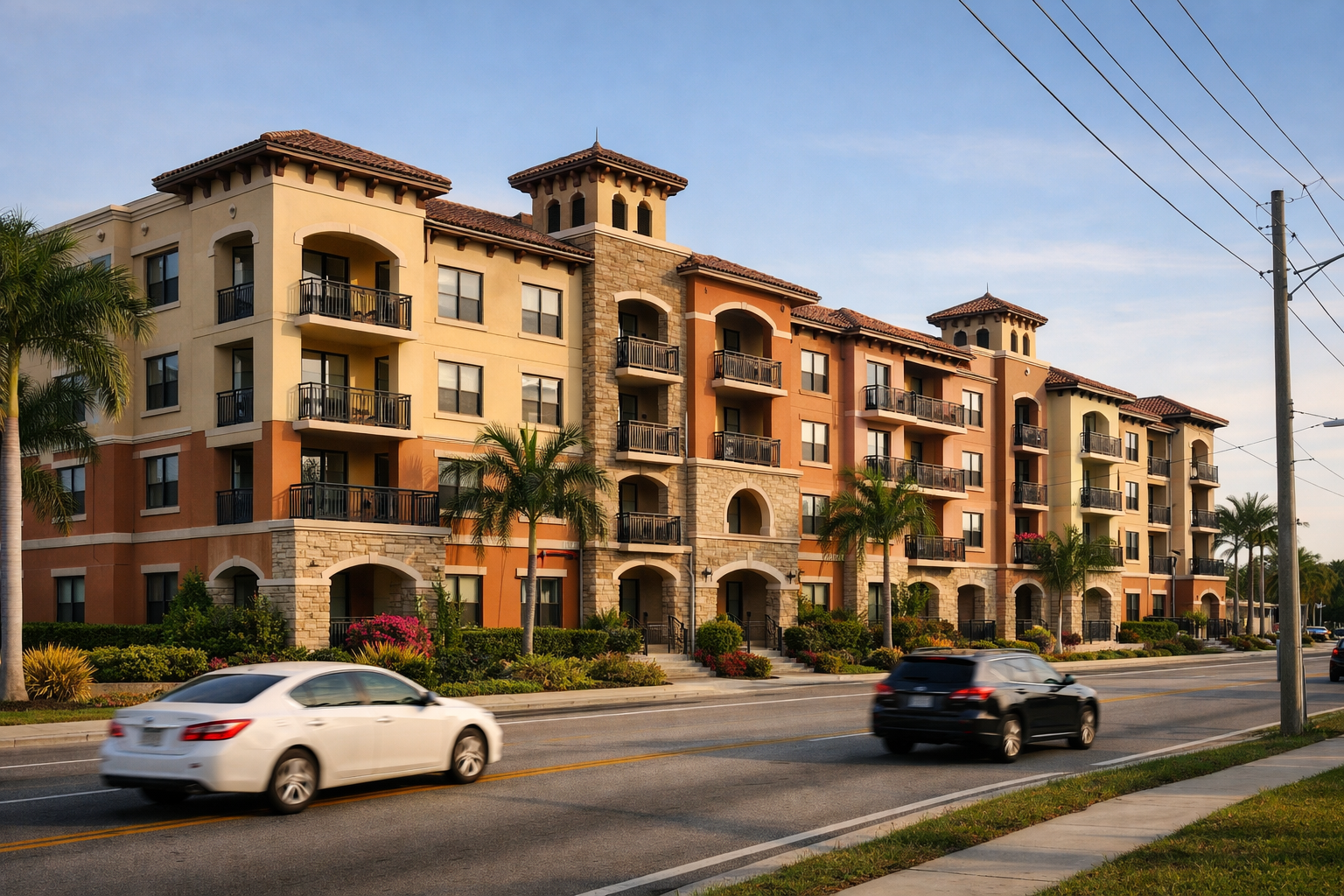
How long should a Miami-Dade home sit before you reduce the price?
In July 2026, the median Miami-Dade single-family home went under contract in 45 days and the median existing condo took 86 days. If your listing is approaching those numbers with no offers, the market has already told you the price is wrong. The practical trigger for most Miami-Dade sellers is 21 days with showings but no offers, or 14 days with almost no showings at all — and the reduction needs to be large enough to cross a buyer's search bracket, which usually means 3% to 5%, not $5,000.
By Pedro Casanova | September 4, 2026
Here's what I tell every Miami-Dade seller who calls me in week five wondering why the showings stopped: the market is not rejecting your house. It's rejecting your price, and it's doing it faster and more publicly than it did two years ago.
The data backs that up. Miami-Dade recorded 1,935 home sales in July 2026, up 8.6% year over year — the eleventh straight month of annual gains. Buyers are transacting. Total active inventory actually fell 15.1% to 15,599 listings. This is not a market with no demand. It's a market with picky, patient, well-informed demand.
So when a home sits, the cause is almost always price, presentation, or a property-level issue the price hasn't accounted for. And the fix is on a clock.
Know your real benchmark before you panic
The single biggest mistake I see is sellers comparing themselves to the wrong number. Miami-Dade is two completely different markets right now, and the benchmark for "too long" depends entirely on what you own.
Single-family homes in Miami-Dade had 4.8 months of supply in July 2026 — a seller's market by any standard measure. Inventory dropped 22.8% year over year to 4,275 active listings. The median price rose 3.8% to $685,000. Median time to contract: 45 days. Median time to full closing: 88 days.
Existing condos are the opposite. 12 months of supply, which is a buyer's market. Median price fell about 1.5% to $400,000. Median time to contract stretched to 86 days, up from 65 days a year earlier, and median time to sale ran 125 days.
Same county. Two entirely different clocks.
That means a Kendall or Palmetto Bay single-family home sitting at 60 days is genuinely behind its market and needs attention now. A Brickell or South Miami condo at 60 days is still ahead of the median and may just need more runway. Judging a condo against the single-family benchmark is how sellers talk themselves into cuts they didn't need — and judging a house against the condo benchmark is how sellers drift into stale-listing territory without noticing.
One more benchmark worth knowing: in June 2026, Miami-Dade sellers received a median of 95% of original list price for single-family homes and 94% for condos. Correctly priced property is still trading close to ask. That mid-90s number is the market telling you accuracy gets rewarded.
The 21-day trigger, and how to read what's actually happening
Your listing gets its peak attention in the first two to three weeks. New-listing alerts fire, agents preview it, saved searches push it out. That initial wave of buyers is the most motivated pool your home will ever see at once. After that, you're fishing from a much smaller pond of new entrants.
So the diagnostic window is short, and what you measure is showing traffic:
- Showings happening, no offers. Your price is close but not compelling. Buyers are walking through, comparing you to the alternatives, and choosing something else. This is the classic 3% to 5% adjustment scenario.
- Almost no showings at all. Your price is far enough off that buyers aren't even clicking. This is a bigger problem than a small cut solves, and it usually means you're priced outside the bracket your actual buyers are searching.
- Showings and offers, but they're low. That's not a pricing problem. That's a market telling you what it thinks the home is worth, and it may be worth taking the conversation seriously rather than waiting for a better number.
Set your trigger before you list, not after. The sellers who net the most decide in advance: no offers by day 21, we review. No contract by the median for our property type, we reposition. Sellers who pre-commit avoid the slow drift — three weeks of hoping, another three weeks of small cuts, and suddenly a 120-day listing that every buyer's agent reads as desperate.
How much to cut — and why $5,000 is a wasted move
This is where most sellers get it wrong. They cut $5,000 off a $685,000 house, congratulate themselves on a price improvement, and get identical results, because nothing about who sees the listing has changed.
A price reduction only works if it moves you into a new pool of buyers.
Buyers search in round brackets. They set a maximum at $700,000, or $650,000, or $500,000 — almost always in $25,000 or $50,000 increments. If you're listed at $715,000, every buyer who capped their search at $700,000 has never seen your home. Not once. Dropping to $705,000 changes nothing. Dropping to $699,000 puts you in front of an entirely new audience overnight.
That's the test for any reduction: does this cut cross a bracket a real buyer is searching? If it doesn't, you've given away money and bought nothing.
The general guidance holds up in Miami-Dade:
- No offers at 21 days with showings: 3% to 4%
- Past the median time to contract for your property type: 4% to 5%, positioned to clear a search bracket
- A condo in a building with open association questions: the cut may need to be larger, because you're also pricing building-level risk
On a $685,000 house, a 3% cut is about $20,550. That feels like a lot. Now run the other side of the math. Holding costs on a Miami-Dade home at that price — property taxes, insurance, maintenance, and mortgage interest if you're financed — add up fast, and Miami-Dade insurance premiums are among the highest in the country. Sit three more months and take the same cut anyway, and you've paid for the delay twice.
And here's the part sellers underestimate: one meaningful cut beats four small ones. A listing history showing $749,000 → $739,000 → $729,000 → $719,000 tells every buyer's agent in the county that you'll keep going. A single decisive move to $699,000 tells them you repriced to sell.
When cutting the price isn't the right move
Not every stalled listing is a pricing problem, and not every pricing problem is best solved by a public price cut.
A concession may move the buyer you already have
Sometimes the better move isn't a lower price at all.
In today's market, buyer requests for closing cost credits and rate buydown contributions are common, and a seller contribution can accomplish something a price cut can't: it solves the buyer's monthly payment problem without repricing your home for every future appraisal and comp.
Conventional loans allow seller concessions of roughly 3% to 9% of the purchase price depending on occupancy and down payment; FHA caps at 6%; VA at 4% plus closing costs. Practically, $10,000 to $20,000 toward a buyer's closing costs or a temporary rate buydown often moves a hesitant buyer further than the same money taken off the price.
The trade-off: a concession only helps a buyer who's already found you. It does nothing to fix a visibility problem. If your issue is that nobody is walking through the door, a concession is the wrong tool — you need the price cut that changes your search bracket. If your issue is that buyers walk through and stall on affordability, a concession may be the cheaper fix.
Relisting resets the counter, not the history
Miami-Dade sellers ask me this constantly, and the honest answer is that a relist is mostly cosmetic.
Withdrawing and relisting can reset the day counter that shows on the public portals. It does not erase MLS history. Any competent buyer's agent pulls the full record — prior list dates, prior prices, cumulative time on market — in about two minutes. A listing showing 15 days with a 200-day history negotiates like a 215-day listing the moment that surfaces.
A relist is worth doing when something real has changed: a genuinely repositioned price, completed repairs, resolved association issues, or new photography for a home that actually looks different now. A relist paired with a substantive change is a real relaunch. A relist alone just adds a line to the history that buyers read as an attempt to hide something.
If you're frustrated enough to be considering the reset, the more useful question is usually whether the original pricing strategy was ever grounded in closed comparable sales — not active listings, which reflect what other sellers hope to get. That's the conversation I'd rather have with you than a relist conversation.
If you own a condo, the price may not be the problem
Condo sellers deserve a separate warning, because in Miami-Dade a condo can be perfectly priced and still sit.
Buyers are underwriting the building as carefully as the unit — milestone inspection status, reserve study results, association budget, assessment history, and whether the project is financeable at all. Cash accounted for 47.5% of Miami-Dade condo sales in July 2026, compared with 21.2% of single-family sales, and that gap exists largely because financing on some buildings has become difficult.
If your unit is in a building with open structural or reserve questions, no price cut fully solves that. What helps is getting ahead of it: having the documents ready, knowing your building's assessment posture, and pricing with the building's realities included rather than discovering them when a buyer's lender does. I've written separately about whether to sell a Miami-Dade condo ahead of a special assessment, and the same logic applies when you're already listed.
Days on market is the market grading your price in public, and the grade compounds. Benchmark against your property type — 45 days for single-family, 86 for condos — set your adjustment trigger before you list, and when you do move, move once and move far enough to cross a bracket a real buyer is searching.
If you're timing a sale against a purchase, the pricing decision gets more complicated, and it's worth reading how sell-first versus buy-first plays out in this market before you commit to either.
Frequently Asked Questions
How long is too long for a house to sit on the market in Miami-Dade?
For single-family homes, the July 2026 median time to contract was 45 days, so a house past 60 days with no offers is meaningfully behind its market. For existing condos the median was 86 days, so a condo at 60 days is still tracking normally. Always benchmark against your property type, not a national average.
How much should I lower my asking price?
Enough to cross a search bracket buyers are actually using — typically 3% to 5%. A $5,000 cut on a $685,000 home changes almost nothing, because the same buyers see the listing. Moving from $715,000 to $699,000 exposes the home to every buyer capped at $700,000.
Is it better to reduce the price or offer a seller concession?
If you aren't getting showings, cut the price — a concession can't fix a visibility problem. If buyers are touring but stalling on the monthly payment, a closing cost credit or rate buydown contribution often moves them for less money than an equivalent price reduction.
Does taking my house off the market and relisting reset days on market?
It can reset the counter shown on public portals, but MLS records preserve cumulative days on market and prior pricing, and buyer's agents routinely pull that history. A relist only helps when it's paired with a real change — a repositioned price, completed repairs, or genuinely new presentation.
Why is my Miami-Dade condo taking so much longer to sell than houses nearby?
Miami-Dade had roughly 12 months of condo supply in July 2026 versus 4.8 months for single-family homes, and buyers are underwriting building documents, milestone inspection status, and reserve funding before they commit. That diligence takes time, and it's why cash made up 47.5% of condo sales that month.
What percentage of asking price do Miami-Dade sellers actually get?
In June 2026, the median percent of original list price received was about 95% for single-family homes and 94% for condos. Accurately priced homes are still transacting close to ask — the mid-90s figure reflects pricing discipline, not a collapsing market.
Where to go from here
If your listing is sitting and you're not sure whether the answer is a price cut, a concession, or a repositioning, the fastest way to find out is to look at the closed comparable sales in your specific submarket and the showing feedback you've already collected. That's a 30-minute conversation, not a research project.
I offer a free buying or selling strategy session — no pressure, just a straight read on where your home stands against the current comps and what your realistic options are. You can grab a time here.
About Pedro Casanova
Pedro Casanova is a real estate broker that leads The KREN Group real estate team serving the Southeast Florida area. They specialize in helping people build wealth through real estate by helping buyers and sellers maximize their opportunity in every transaction. Connect with the team at www.thekrengroup.com.
The KREN Group | Keller Williams Premier Properties

Pedro Casanova
| The KREN Group | Keller Williams Premier Properties | PLACE
or another way