
Categories
Miami Community News, Buying a homePublished September 21, 2026
Do You Have to Buy in Miami-Dade Before December 31, 2026?


Do you have to buy a home in Miami-Dade before December 31, 2026?
No. If Florida's Amendment 3 passes on November 3, 2026, the date that matters is when you become a Florida resident — not when you close on a house. Anyone who is a permanent Florida resident on or before December 31, 2026 stays eligible for the larger homestead exemption ($150,000 in 2027, rising to $250,000 in 2028) whenever they eventually buy and apply. Anyone who establishes Florida residency on or after January 1, 2027 starts at roughly $50,000 and has to hold a Florida homestead exemption for four years before the larger exemption first applies in the fifth year.
By Pedro Casanova | September 2, 2026
That distinction is doing a lot of work right now, and a lot of the marketing you're seeing gets it backwards.
I've had four different versions of this conversation in the last few weeks, all from people moving here from out of state, all some variation of: "I have to close on something before New Year's or I lose $250,000 in tax savings, right?"
Not quite. And the difference between "buy by December 31" and "be a resident by December 31" is the difference between rushing into a house you'll regret and taking your time in a market that is currently giving buyers real leverage.
Here's how it actually works.
What Amendment 3 would change
Amendment 3 — filed as CS/HJR 1F — is on the November 3, 2026 general election ballot. It needs 60% approval to take effect. It has not passed yet, and nothing below applies unless it does.
If it does pass, it takes effect January 1, 2027 and replaces Florida's current homestead exemption structure with:
- $25,000 applied to school district millages (unchanged from today)
- Up to $150,000 applied to non-school millages beginning January 1, 2027
- Up to $250,000 applied to non-school millages beginning January 1, 2028
- Annual CPI adjustments beginning January 1, 2029
For comparison, the current homestead exemption for the 2026 tax year is up to $51,411 — $25,000 that applies to all millages, plus $26,411 that applies to non-school millages only.
The amendment would also drop the assessment cap on non-homestead property — second homes, rentals, commercial — from 10% to 5%.
Two things it does not touch: Save Our Homes, which still caps annual homestead assessment increases at 3% or CPI, whichever is lower, and portability. If you already own a homesteaded home in Florida and you're moving within the state, your Save Our Homes portability math is unchanged by this amendment.
And it would not show up on a tax bill until November 2027, following the August 2027 TRIM notice.
The five-year provision — and what the deadline really is
This is the part driving the urgency, and it's the part getting garbled.
The amendment sets up a separate, smaller starting point for people who become Florida residents on or after January 1, 2027. Those new residents would begin with a $50,000 exemption (CPI-adjusted starting in 2028) applied to the first $50,000 of assessed value for non-school taxes. Only after maintaining a Florida homestead exemption for four years would the larger exemption become available — first applying January 1 of the fifth year.
The ballot language spelling this out was rewritten in August 2026 after a Leon County circuit judge ruled the original wording defective. The court-ordered version reads, in relevant part, that persons who are not Florida residents on December 31, 2026 will receive the existing homestead exemption upon qualifying, "with the increased homestead exemption beginning with the fifth year of exemption, to the extent permitted by the U.S. Constitution."
That last clause is not decoration. Durational residency requirements have a complicated constitutional history, and the drafters clearly knew it. Treat the five-year provision as real but not yet fully settled.
Now the part that matters for your calendar. Property appraiser guidance on the proposal is explicit: someone who establishes Florida residency by December 31, 2026 but has not yet purchased a home would still be eligible for the higher exemption amount when they do buy and apply for homestead.
You are racing a residency date, not a closing date.
If you're renting in Doral while you figure out whether you actually want to be in Kendall or Palmetto Bay, and you establish Florida domicile before the end of the year, you have not forfeited anything. You can buy in 2027, in 2028, whenever the right house shows up.
That is a very different decision than the one a lot of buyers think they're facing.
What "establishing residency" actually takes
Permanent residency in Florida is determined as of January 1, and the Miami-Dade Property Appraiser accepts a range of proof, including:
- A valid Florida driver's license or Florida ID card
- Florida vehicle registration
- Florida voter registration
- The prior year's IRS return or current W-2 showing the Florida address
- Bank statements and a checking account registered at the address
- Proof of utility payments at the property
- A recorded Declaration of Domicile, filed with the Miami-Dade Clerk
You want that paper trail dated before January 1 — not scrambled together in February. Moving your physical life here in November and getting the license in January is exactly the kind of near-miss that costs people the whole benefit.
This is also where a tax professional earns their fee. I can tell you what the property appraiser looks for. I can't tell you how a residency change interacts with the state you're leaving, and some states are notoriously aggressive about it.
What this is actually worth in Miami-Dade
Round numbers, because your specific number depends on where in the county you land.
Unincorporated Miami-Dade ran about 16.93 total mills for the 2025–26 tax year, of which roughly 6.63 mills is the school district portion. That leaves about 10.30 non-school mills — and the non-school portion is the only part the enlarged exemption would touch.
So for a homesteaded property with enough assessed value to absorb the full exemption:
- 2027: $150,000 − $51,411 = $98,589 of additional exempt value × 0.0103 ≈ $1,015 in annual savings
- 2028: $250,000 − $51,411 = $198,589 of additional exempt value × 0.0103 ≈ $2,045 in annual savings
Miss the residency date and you're looking at roughly that $2,000-a-year gap for four tax years before the larger exemption kicks in — call it $8,000 to $9,000 in Miami-Dade, give or take.
Real money. Not "buy the wrong house in Cutler Bay in December" money.
And note the assumptions baked into that math: it assumes the amendment passes, assumes millage rates hold, assumes your assessed value is high enough to use the whole exemption, and ignores non-ad valorem assessments, which the homestead exemption doesn't reduce at all.
A few more things worth knowing before you build a plan around this:
- Second homes get nothing here. The enlarged homestead exemption is for permanent residents only. If you're buying a Miami-Dade property you'll use seasonally, the homestead side of this amendment doesn't apply to you — though the 10%-to-5% non-homestead cap reduction would.
- Your first-year tax bill resets to your purchase price. Miami-Dade's non-homestead cap resets on a change of ownership, so underwrite year one on what you paid, not on the seller's capped assessed value. This trips up out-of-state buyers constantly, and it's one of the carrying costs relocators consistently underestimate alongside insurance and HOA dues.
- Homestead itself still requires title plus residency on January 1, with the DR-501 application due by March 1. Buy in March 2027 and your first homestead year is 2028, regardless of when you became a resident.
- Nothing is final until implementing legislation exists. The property appraisers are saying plainly that administrative details can't be settled until after the vote.
The honest read: if you were already moving to South Florida in the next few months, establishing residency before year-end is a cheap piece of insurance on a benefit that may be worth several thousand dollars a year. If you weren't, this is not a good enough reason to compress a relocation.
Frequently Asked Questions
Do I have to close on a Florida home before December 31, 2026?
No. Guidance on the proposed amendment indicates that establishing Florida permanent residency by December 31, 2026 preserves eligibility for the larger exemption even if you buy later. The purchase can happen in 2027 or beyond.
What happens if I become a Florida resident in 2027?
You would start with the new-resident exemption of about $50,000 applied to non-school taxes, then become eligible for the larger exemption after maintaining a Florida homestead exemption for four years — first applying January 1 of the fifth year.
Is Amendment 3 already law?
No. It goes before Florida voters on November 3, 2026 and requires 60% approval. If it fails, the current homestead exemption structure — up to $51,411 for 2026 — stays in place.
Does this change Save Our Homes or portability?
No. The amendment leaves the 3%-or-CPI Save Our Homes assessment cap and Florida's portability provisions intact.
Would this eliminate my Miami-Dade property tax bill?
Unlikely. The enlarged exemption applies only to non-school millages, and school taxes plus non-ad valorem assessments would continue. In Miami-Dade, the school portion alone was roughly 6.63 mills for 2025–26.
Where this leaves you
If you're relocating to Miami-Dade, the question to answer between now and December isn't "what should I buy?" It's "am I going to be a Florida resident by December 31?" Get that right and you keep every option open — including the option to take another six months finding the right house.
Sequencing a relocation, a residency change, and a purchase across two tax years is genuinely fiddly, and the right order depends on where you're moving from. If you want to map out what your timeline should look like, I offer a free buying or selling strategy session — no pressure, just a straight conversation about where you stand and what your options are. You can grab a time here.
One caveat I'll repeat because it matters: I'm a real estate broker, not a CPA or an attorney. Loop in a tax professional before you make a residency decision, especially if you're leaving a state with an income tax.
About Pedro Casanova
Pedro Casanova is a real estate broker that leads The KREN Group real estate team serving the Southeast Florida area. They specialize in helping people build wealth through real estate by helping buyers and sellers maximize their opportunity in every transaction. Connect with the team at www.thekrengroup.com.
The KREN Group | Keller Williams Premier Properties
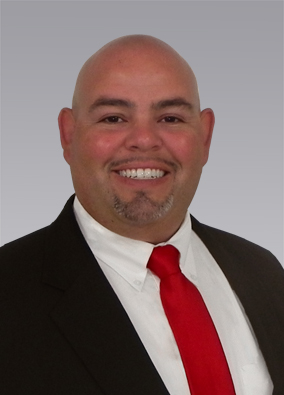
Pedro Casanova
| The KREN Group | Keller Williams Premier Properties | PLACE
or another way