
Categories
Selling a HomePublished September 28, 2026
Inherited a Miami-Dade House With Siblings Who Disagree?

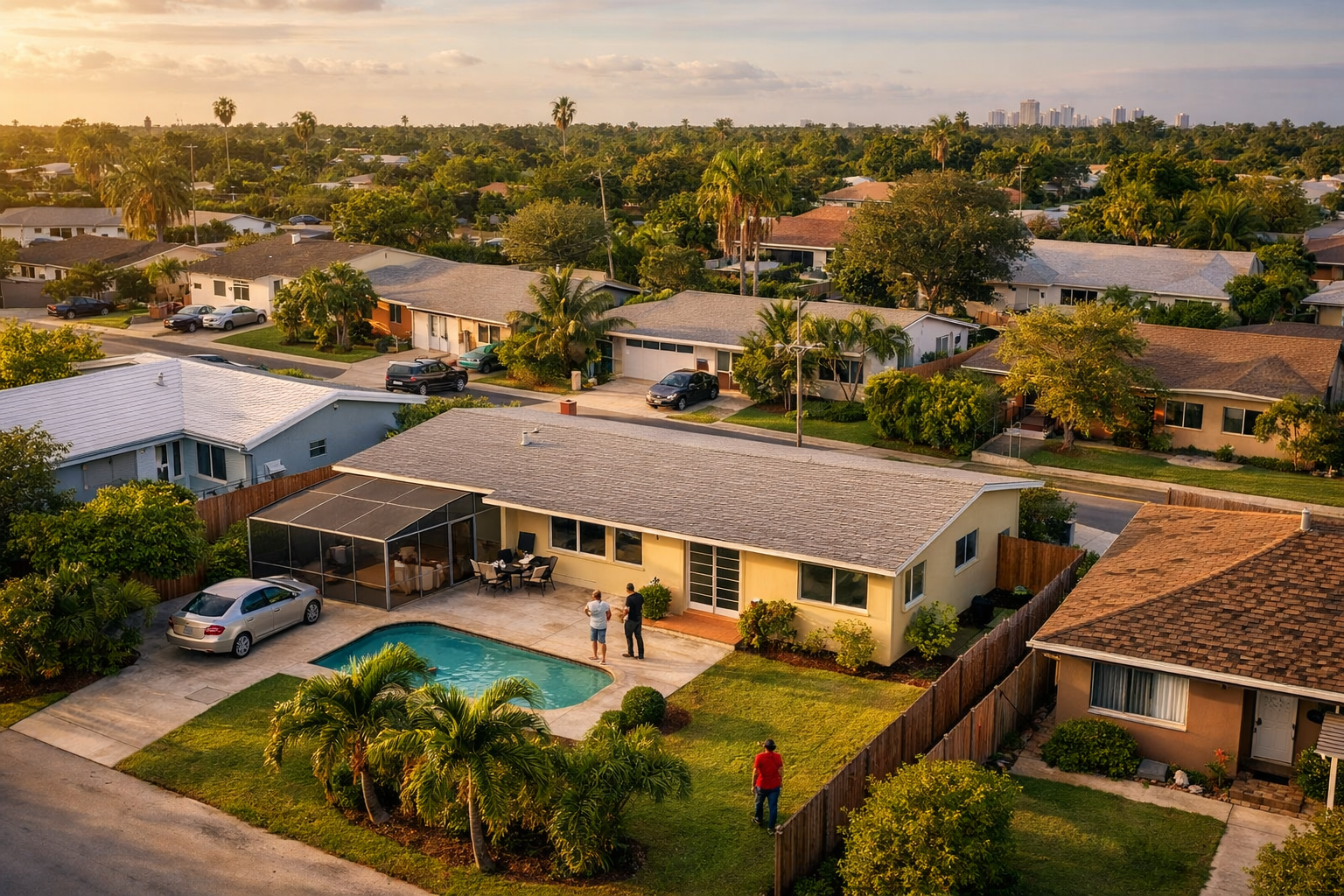
What happens when siblings inherit a Miami-Dade house and can't agree on selling it?
Any co-owner can file a partition action in Florida court and force the property to be sold — no one needs the others' consent. But if the property qualifies as "heirs property" under Florida's Uniform Partition of Heirs Property Act (F.S. 64.201–64.214, effective July 1, 2020), the court must first order an appraisal and give the other co-owners 45 days to buy out the sibling who wants out, at the appraised value of their share. Only if no one elects the buyout does the court move toward a sale — and even then, the Act requires an open-market sale through a licensed broker rather than a courthouse auction.
By Pedro Casanova | September 7, 2026
The house is in Kendall. It's paid off. Your mother left it to the three of you in equal shares.
One of you wants to sell now and take the cash. One wants to move in and keep the family home. One won't return anyone's calls.
I get some version of this call several times a year, and the thing that surprises people most is how much leverage the law gives to whoever is most willing to escalate. Understanding that dynamic early is usually what keeps a family out of court.
Here's how it actually works in Florida — and where the money goes if you let it get that far.
Why one sibling can force a sale, and why that's the worst outcome
When you inherit a house with siblings, you become tenants in common. Each of you owns an undivided fractional interest in the whole property — not a specific room, not the back half of the lot. Selling, mortgaging, or making major improvements requires everyone to sign.
That sounds like a stalemate. It isn't. Florida gives any co-owner the right to file a partition action under Chapter 64, and the court can order the property divided or sold whether or not the other owners agree. It's the same mechanism that forces the issue when a divorcing couple can't agree on selling a jointly owned Miami-Dade house. Physically dividing a single-family house is almost never practical, so partition of a house means partition by sale.
The reason this is a bad outcome for everyone, including the sibling who files, comes down to two numbers.
The fees come out of the house. Under F.S. 64.081, every party is bound to pay a share of the costs and attorney fees "commensurate with their services rendered and of benefit to the partition," determined on equitable principles in proportion to each party's interest. In a sale, the court can order those fees paid straight out of the sale proceeds. So the sibling who "wins" doesn't get their fees paid by the losers — the family pays them collectively, off the top. Attorneys who handle these cases generally put an uncontested partition at six to nine months, and a contested one with valuation and accounting disputes at twelve to eighteen months and $10,000 to $30,000 or more in fees.
A forced sale sells for less. Property sold under court order, on the court's timeline, without normal marketing exposure, commonly trades below what the same house would bring on a listed, properly marketed sale. In a Miami-Dade single-family market running around 4.8 months of supply, that gap is entirely avoidable — the house doesn't need a rush sale to move.
Add those together and a partition fight over a $700,000 Kendall house can cost the siblings a six-figure combined haircut. Every dollar of it is negotiable outside a courtroom.
The Heirs Property Act buyout: a 45-day window most families don't know about
This is the part almost nobody knows, and it changes the negotiation completely.
In 2020, Florida adopted the Uniform Partition of Heirs Property Act, codified at F.S. 64.201–64.214. It applies when property held in tenancy in common meets the definition in F.S. 64.202(6): there is no written agreement binding all the co-owners that governs partition, one or more co-owners acquired title from a relative, and at least 20% of the interests are held by relatives (or 20% of the co-owners are relatives, or 20% of the interests are held by someone who took title from a relative).
An inherited family home split among siblings with nothing in writing between them is the textbook case.
When the Act applies, the court can't just order a sale. The sequence is:
- Court-ordered appraisal. Under F.S. 64.206, the court appoints a disinterested Florida-licensed appraiser to determine fair market value, valuing the property as though it were owned by a single owner in fee simple. The court then sends notice of the appraisal and holds a hearing no sooner than 31 days after that notice, and sets the value.
- The buyout election. Under F.S. 64.207, any co-owner other than the one who asked for a sale has 45 days after the notice is sent to tell the court they elect to buy out the requesting co-owner's interest. The price is the court-determined value multiplied by that co-owner's fractional share.
- Partition in kind is still preferred. If nobody buys out, the court is directed to divide the property in kind unless doing so would prejudice the owners as a group — and F.S. 64.209 makes the court weigh things a standard partition ignores, including a co-owner's sentimental or ancestral attachment to the property, whether a co-owner is currently living there and how much that person would be harmed by losing that use, and whether each owner has been paying their pro rata share of taxes, insurance, and upkeep. No single factor controls.
- Open-market sale, not an auction. If the court does order a sale, F.S. 64.208 requires an open-market sale unless sealed bids or an auction would be more economically advantageous to the owners as a group. The parties get 10 days to agree on a Florida-licensed real estate broker; if they can't, the court appoints a disinterested one. The broker must market the property in a commercially reasonable manner and cannot list below the court's determination of value.
So the practical picture is very different from "my brother can force a fire sale." The sibling who wants out is really saying: pay me my share at appraised value, or we spend a year and a chunk of the equity getting to a listed sale anyway.
That reframe — buyout at appraised value versus listed sale at market — is the actual decision. And both of those outcomes are things you can reach on your own, this month, without a filing fee.
Settle these three things before anyone calls a lawyer
Almost every one of these fights I've watched turns on the same three unresolved items. Get them on paper and the disagreement usually shrinks to something ordinary.
Who has been paying, and who has been living there. Florida follows the rule that a co-tenant in possession does not owe rent to the others absent an ouster — an actual exclusion, like changing the locks or refusing access. Simply living in the house rent-free is not, by itself, a rent obligation. If you're the one being kept out, a written demand for access matters, because in practice the fair-rental-value clock tends to start at the demand rather than the date of death. On the flip side, if you've been covering taxes, insurance, the mortgage, or necessary repairs, keep the canceled checks and invoices. Those contributions get credited in the accounting when proceeds are divided. Sorting out the credits informally is far cheaper than litigating them.
What the house is actually worth. Half of these disputes are not about whether to sell — they're about price. One sibling has a Zillow number, another has a neighbor's asking price, and neither is a valuation. Two independent opinions of value, or one appraisal the family agrees in advance to treat as binding, removes most of the argument. That's also exactly what the court would do first under 64.206, at considerably greater expense.
Whether the estate even closed, and who's actually on title. This one stops more deals than any disagreement. Homestead property in Florida generally passes outside probate directly to the heirs, which means the personal representative can't convey it — every heir who took an interest has to sign the deed. If your parent was survived by a spouse and descendants, F.S. 732.401 may have given the spouse a life estate with a vested remainder to the descendants, unless the spouse filed a recorded notice of election within six months of death to take an undivided one-half interest as a tenant in common instead. And a personal representative can only sell non-homestead real estate without unanimous heir consent when the will grants an express power of sale; without one, it takes a court order or everyone joining in. Confirm the title picture before you argue about the price — I've seen families negotiate for months over a house one of them didn't actually own a share of. While you're at it, check what happens to the homestead exemption and the Save Our Homes cap when a Miami-Dade home is inherited, because the carrying cost after reassessment is often what pushes a sibling from "keep it" to "sell it."
One more piece of good news that lowers the temperature: inherited property gets a stepped-up basis to fair market value as of the date of death, and it receives long-term capital gains treatment regardless of how long you hold it. For a house that's been in the family for decades, that often means selling in the near term produces a very small taxable gain — which makes "sell and split it" much less painful than siblings assume. Confirm the specifics with a CPA, because converting the house into a rental instead changes the analysis considerably — the sell-versus-hold math on a Miami-Dade rental has to clear insurance, taxes, and maintenance before it clears anything for the family.
If the family does land on selling, the ordinary path applies: a title company handles closing in Miami-Dade, doc stamps run $0.60 per $100 of consideration on a single-family home (with an added $0.45 per $100 surtax on property that isn't single-family residential), and a marketed sale in the current single-family market is moving meaningfully faster than the condo segment, which is sitting near 12 months of supply.
Frequently Asked Questions
Can one sibling force the sale of an inherited house in Florida?
Yes. Any co-owner can file a partition action and the court can order a sale without the other owners' consent. But if the property qualifies as heirs property, the other co-owners get a court-supervised appraisal and 45 days to buy out the filing sibling's share at that appraised value before a sale proceeds.
How much does a partition action cost in Florida?
Filing fees are a few hundred dollars, but attorney fees are the real cost — commonly $10,000 to $30,000 or more in a contested case. Under F.S. 64.081 those fees are apportioned among all the owners in proportion to their interests and can be taken out of the sale proceeds, so everyone pays, not just the person who filed.
Does a sibling living in the inherited house have to pay rent to the others?
Generally no. Under Florida law a co-tenant in possession doesn't owe rent to the other co-tenants unless there's been an ouster — actual exclusion of the others from the property. A written demand for access or possession is what typically starts the fair rental value analysis, so put it in writing early.
Do all heirs have to sign to sell an inherited Miami-Dade house?
For homestead property, yes — it passes outside probate directly to the heirs, so every heir with an interest must sign the deed. For non-homestead property, a personal representative can sell without unanimous consent only if the will grants an express power of sale; otherwise it takes a court order or all beneficiaries joining in the transaction.
Will we owe capital gains tax if we sell the house we inherited?
Only on appreciation after the date of death. Inherited property receives a stepped-up basis to fair market value as of that date and automatically gets long-term capital gains treatment. On a house sold within a year or two of inheriting, the taxable gain is often small — but confirm your own numbers with a CPA.
The short version: one sibling can start a partition, but the Heirs Property Act gives the rest of you a real, statutory window to buy them out at appraised value — and every path the court would take you down eventually is a path you can take yourselves for far less money. The families who do well here settle valuation and title first, then negotiate the buyout-versus-sale question with actual numbers in front of them.
If you're sitting on an inherited Miami-Dade property and the family isn't aligned, I'm happy to give you an honest opinion of value and walk you through what a listed sale would realistically net each of you — that's usually the number that ends the argument. I offer a free buying or selling strategy session with no pressure attached. You can grab a time here.
This article covers general Florida process and is not legal or tax advice. Partition, probate, and homestead questions are fact-specific — work with a Florida attorney and a CPA on your own situation.
About Pedro Casanova
Pedro Casanova is a real estate broker that leads The KREN Group real estate team serving the Southeast Florida area. They specialize in helping people build wealth through real estate by helping buyers and sellers maximize their opportunity in every transaction. Connect with the team at www.thekrengroup.com.
The KREN Group | Keller Williams Premier Properties

Pedro Casanova
| The KREN Group | Keller Williams Premier Properties | PLACE
or another way