
Categories
HomeownershipPublished October 20, 2026
Should You Give Up a 3% Mortgage to Move Up in Miami-Dade?


Is it worth giving up a 3% mortgage to move up in Miami-Dade?
Usually only when a real need is driving the move, because your rate is now a big part of what the move costs. With the 30-year fixed at 7.28% (Freddie Mac, October 1, 2026), trading a roughly $1,600 principal-and-interest payment for a $1 million move-up loan can add about $2,700 a month before taxes and insurance. If you need the space, the numbers can still work. If it's a "would be nice," compare it against renovating, renting out, or waiting first.
By Pedro Casanova | October 5, 2026
The 30-year fixed-rate mortgage averaged 7.28% in Freddie Mac's October 1 survey, up from 6.34% a year ago. It crossed 7% on September 24 for the first time since January 2025, after the Federal Reserve raised its benchmark rate to 3.75%–4.00% in mid-September and the 10-year Treasury yield climbed to around 5%.
If you locked in near 3% in 2020 or 2021, that headline lands differently. The house you want costs more, and the loan you'd give up just got a lot more valuable.
This is the question I'm hearing from move-up owners across Kendall, Pinecrest, Palmetto Bay, and Cutler Bay right now: is the bigger house worth losing my rate? You can put a number on that before you decide.
What the move actually costs you each month
Here's a round-number example. It isn't your situation, but the shape holds for most owners with a pandemic-era loan. These are illustrative figures, not a loan offer.
- Your current loan: $380,000, 30-year fixed at 3.0%, taken in 2020. Principal and interest is about $1,602 a month. Six years in, you owe roughly $328,600.
- Your home's value: $750,000. Assume about 6% in total selling costs ($45,000, covering commissions, title charges, and Miami-Dade doc stamps of $0.60 per $100, or $4,500). Commissions are negotiable, so use your own number. Net equity: about $376,000.
- The move-up purchase: $1,000,000, with all of that equity down. The new loan is about $623,600. At 7.28%, principal and interest is about $4,267 a month.
That's roughly $2,665 more per month — about $32,000 a year — before property taxes, insurance, and association dues. Part of each payment builds equity, but it's still cash leaving your account every month.
Two more costs people forget. The new mortgage carries Florida documentary stamp tax on the note ($0.35 per $100 borrowed) and the intangible tax (0.2% of the loan), about $3,430 on a loan this size. And the rate move alone matters: that same $623,600 loan at last year's 6.34% would have run about $3,876 a month, so today's rates add roughly $390 a month on the identical house.
Now look at it from the other direction. If you only wanted to refinance your remaining $328,600 into today's rate, principal and interest would jump from $1,602 to about $2,249 a month. You'd also restart a 30-year clock: about $480,800 in lifetime interest, versus roughly $132,800 left on your current loan over the next 24 years. That gap is what your old rate is worth, and it's what you'd be handing back.
So the bigger house has to be worth about $2,700 a month more to you than the one you're in. For some families it clearly is. For others, it's a number worth sitting with.
Four ways to get what you need without giving up the rate
1. Fix the house you have. If the real problem is a kitchen, a bedroom, or a bathroom count, a renovation can cost far less per month than a move. A home equity line averaged about 6.82% APR nationally on September 29, but it's variable and tied to a prime rate that just rose to 7.00%. On a $150,000 draw, interest-only is about $850 a month, and it will move when prime does. Two Miami-Dade checks before you build: ask the Property Appraiser how an addition changes your assessed value, and confirm your insurer is fine with the plans.
2. Keep it and rent it. Keeping your old house lets you hold the 3% loan, but it's the most rule-heavy option. Renting out a homesteaded property can reset your Save Our Homes benefit, and Fannie Mae is changing how it counts rent from a departing residence for applications on or after November 1, 2026. Ask your lender how it would treat the rent before you count on it.
3. Know what's actually portable. Your mortgage isn't. Conventional loans carry due-on-sale clauses, so you can't take that rate with you. Most FHA, VA, and USDA loans, however, are assumable with lender approval. If yours is one of those, it can be a selling point for your buyer. If you're the one buying, an assumable loan means paying the seller's equity gap in cash up front, which is a large number in a market with this much appreciation.
4. Be careful with the rate-shopping shortcuts. Adjustable-rate loans made up 9.8% of mortgage applications in mid-September, according to the Mortgage Bankers Association, as buyers reach for a lower starting payment. That works only if you can handle the payment after the first adjustment. And "I'll refinance when rates fall" is a plan, not a promise — nobody can tell you when, or whether, and refinancing has its own closing costs.
When moving up still makes sense
A real need changes the math: a new family member, a job change, a parent moving in, a home that no longer works physically. Those aren't "nice to haves," and waiting on them has a cost too.
The market is also not standing still while you decide. In August, the Miami-Dade single-family median was $680,000, up 3.8% from a year earlier, with 4.9 months of supply, a median of 40 days to contract, and sellers receiving 95.3% of original list price (MIAMI REALTORS). That's a tight market, which helps you as a seller and gives you limited negotiating room as a buyer. Condo and townhome owners moving into a house should plan for the opposite experience on their own sale, since condo inventory has been running closer to a year of supply.
Two Miami-Dade items belong in your math before any offer:
- Property taxes. When you buy, the new house is assessed at market value rather than at your capped number. You may be able to carry up to $500,000 of your Save Our Homes savings with you, but only if you meet the filing windows. Our portability breakdown walks through exactly how it works.
- Insurance. A bigger house usually means a bigger premium, and the roof is often the deciding factor. Verify the number inside your inspection period, using the steps in our guide to checking whether a Miami-Dade house can be insured.
If you do move, sequencing matters as much as rate. We cover the trade-offs of timing the sale and the purchase in sell first or buy first when moving up.
Your own number depends on your loan balance, your rate, your equity, and the price range you're considering. That's where running the real figures side by side beats any rule of thumb, and it's exactly what I walk move-up clients through before we list or write an offer.
Frequently Asked Questions
Should I keep my 3% mortgage or move to a bigger house?
Keep it unless a real need is driving the move. At 7.28%, a move-up loan on a $1 million purchase can add roughly $2,700 a month in principal and interest compared with a pandemic-era payment, so the bigger house needs to be worth that difference to you.
Can I take my low mortgage rate with me to a new house?
No. Conventional mortgages aren't portable and carry due-on-sale clauses. FHA, VA, and USDA loans are generally assumable by a qualified buyer with lender approval, which means your loan may help you sell, but it doesn't travel with you.
Is a HELOC a good alternative to moving?
It can be, if the need is a renovation rather than a different location. HELOCs are variable and tied to prime, which is now 7.00%, so the payment can change. Compare the monthly cost against the move-up payment, and confirm your insurer and the Property Appraiser's treatment of any addition first.
What happens to my Save Our Homes cap if I move within Miami-Dade?
The new home is assessed at market value, but portability can transfer up to $500,000 of your accumulated savings if you establish the new homestead within the allowed window and file by March 1. Missing the filing deadline means no refund.
Will rates come down if I wait?
Nobody can say. If you buy now, you can refinance later if rates fall, but that carries closing costs and isn't guaranteed. Decide based on what you can comfortably pay at today's rate.
Next step
The fastest way to decide is to run your real balance, rate, equity, and target price side by side, including taxes, insurance, and what you'd net on your current home. If you'd like help with that, I offer a free buying or selling strategy session — no pressure, just a straight conversation about where you stand and what your options are. You can grab a time here.
Figures in this post are illustrative and are not a loan offer, tax advice, or financial advice. Confirm your own numbers with your lender and a tax professional.
About Pedro Casanova
Pedro Casanova is a real estate broker that leads The KREN Group real estate team serving the Southeast Florida area. They specialize in helping people build wealth through real estate by helping buyers and sellers maximize their opportunity in every transaction. Connect with the team at www.thekrengroup.com.
The KREN Group | Keller Williams Premier Properties
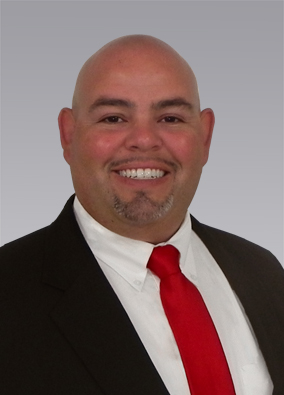
Pedro Casanova
| The KREN Group | Keller Williams Premier Properties | PLACE
or another way