
Categories
Market Updates, Investing in Real EstatePublished November 10, 2026
Rent First or Buy When Relocating to Miami-Dade?

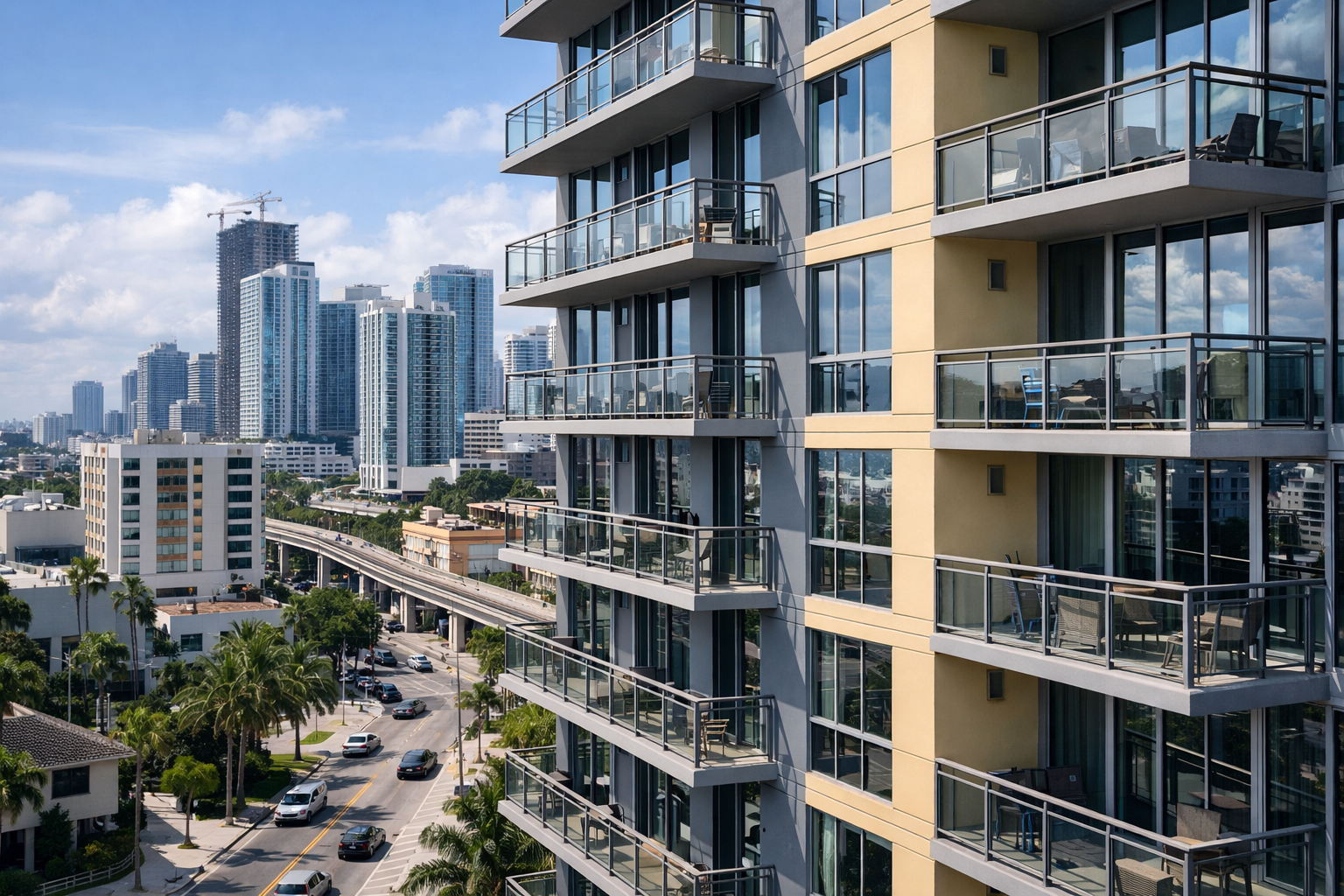
Should you rent first or buy when relocating to Miami-Dade?
If you're moving to Miami-Dade from out of state, rent first when you don't yet know your job situation, your commute, or whether you want a condo or a house. Buy right away when you have a stable income, a clear area, and the cash to cover insurance and reserves. The deciding factors are Florida's January 1 homestead rule, hurricane deductibles that can run into five figures, and the cost of getting out of a purchase that turns out wrong.
By Pedro Casanova | October 23, 2026
Most relocation advice lands on a vague "rent for six to twelve months." That's a fine starting point, but it skips the Miami-Dade specifics that actually change the math. Here's how I walk relocating clients through the decision.
What renting first actually buys you
Renting buys you information. You learn which part of the county fits your commute, whether you want a condo or a house, and what a summer of storm season feels like, all before you sign a 30-year note.
In Miami-Dade, that information is worth more than it is in most markets because the product mix is so lopsided. September 2026 numbers from Echo Fine Properties show 4,536 active single-family listings and 11,706 active condo and townhome listings countywide. The single-family median was $692,000 (up about 4% year over year) and the condo and townhome median was $417,090 (down about 1%). Those are two very different markets with different carrying costs, and many relocators discover which one they want only after living here.
A few things worth testing in a rental before you buy:
- Your real commute. Drive it at 7:30 a.m. on a Tuesday, not on a Sunday afternoon.
- Condo or house. Living in a building with an association tells you quickly whether you want rules, amenities, and monthly dues, or a yard and your own roof.
- Your insurance reality. You can't get a homeowners quote for a home you don't own, but you can see how your own budget absorbs a Florida-sized insurance bill.
- Your employment. If a job is probationary or remote-approved-for-now, a purchase can wait.
What waiting costs you
Renting isn't free. You pay rent with no equity, you may face rent increases at renewal, and you move twice. You also carry the risk that rates or prices move before you're ready. Freddie Mac's 30-year fixed average was 7.32% as of October 22, 2026, down from 7.40% the week before, so rates are moving, but nobody can promise where they go next.
Here's a hypothetical to make it concrete. Say you buy a $700,000 single-family home with 20% down. The loan is $560,000. At 7.32%, principal and interest alone is about $3,847 a month. Taxes, insurance, and any HOA come on top. Florida also charges documentary stamp tax on the mortgage note ($0.35 per $100, about $1,960 on this loan) and a 0.2% intangible tax (about $1,120), so roughly $3,080 in state mortgage taxes before the rest of your closing costs. This is an illustration, not a quote, and your lender will give you the real figures.
Compare that with a rental. If a comparable home rents for a figure well below that all-in monthly ownership cost, renting for a year costs you less cash flow, but you're paying someone else's mortgage. If the gap is small, waiting has a real price. This is the kind of number I run for clients before they decide, using their actual target area and budget.
The Miami-Dade factors that tip the decision
The January 1 homestead line
Homestead exemption in Florida depends on owning and living in the home as your permanent residence on January 1. Buy in February and you wait until the next January 1 to qualify. Closing in December rather than February can mean a full year of lower taxes, though you shouldn't rush a purchase for that reason alone.
Amendment 3 is on the November 3, 2026 ballot and needs 60% to pass. A September St. Pete Polls survey reported by ABC Action News put support at 45%. If it passes, it would raise the non-school homestead exemption to $150,000 in 2027 and 250,000in2028.Butthere'sacatchforrelocators:peoplewhoweren'tFloridaresidentsbyDecember31,2026wouldgettheexistingexemption(51,411 maximum in 2026) when they first qualify, with the larger exemption starting in their fifth year of exemption, "to the extent permitted by the U.S. Constitution." I covered the details in do you have to buy in Miami-Dade before December 31, 2026. The short version: don't let a ballot measure rush you into the wrong house.
Hurricane deductibles
This is the one that surprises people from other states. Under F.S. 627.701, insurers must offer hurricane deductibles of $500, 2%, 5%, and 10% of your dwelling limit, though the $500 option doesn't have to be offered at dwelling limits of $250,000 or more. On a $500,000 dwelling limit, a 2% deductible is $10,000, 5% is $25,000, and 10% is $50,000. The deductible applies on a calendar-year basis, and it's per structure if you have more than one.
A renter's policy for a rental unit doesn't put this kind of money at risk. A homeowner's does. If you buy, make sure your reserves cover the deductible you choose. One 2025 Insurify estimate cited by Bloomberg put Florida's average homeowners premium at $8,292, so insurance belongs in your budget from day one. My article on can you insure that Miami-Dade house walks through roof age and quotes before you commit.
Cost of living has changed
Bloomberg reported in July 2026 that, by 2024 federal data, the Miami metro cost of living passed greater New York's for the first time on record, with housing costs about 5% higher. If you're comparing against a Northeast budget, don't assume Florida is cheaper. What relocating to Miami-Dade really costs beyond the mortgage breaks down the line items.
A simple way to decide
Rent first if two or more of these are true:
- You haven't picked a neighborhood or property type.
- Your job or income is new, changing, or unconfirmed.
- You don't have reserves for the closing costs plus a hurricane deductible.
- You're selling a home elsewhere that hasn't closed.
Buy sooner if these are true:
- Your income is stable and you know your commute.
- You've chosen condo or house for specific reasons.
- Your reserves cover down payment, closing costs, and a deductible.
- You plan to stay several years, since buying and later selling carries transaction costs.
You can also split the difference. Many relocators rent for a short stretch while using the time to get pre-approved, get insurance quotes on target homes, and tour. If you do end up buying remotely before you move, we can walk through how to do it safely in a strategy session.
This isn't tax, legal, or insurance advice. Confirm homestead and insurance details with the right professionals for your situation.
Frequently Asked Questions
How long should you rent before buying in Miami-Dade?
Many relocators rent six to twelve months to learn the area and confirm their finances. Your timeline should depend on whether you've settled on an area, a property type, and a stable income rather than on a fixed number of months.
Can you get homestead exemption in the year you move?
Only if you own the home and make it your permanent residence by January 1 of that year. If you close later, you generally qualify beginning the following January 1, and you file the application by March 1.
What is a hurricane deductible in Florida?
It's a separate deductible, usually a percentage of your dwelling coverage, that applies to hurricane losses. Under F.S. 627.701, insurers offer 2%, 5%, and 10% options, and a 2% deductible on a $500,000 dwelling limit is $10,000.
Is Miami cheaper than New York now?
Not by every measure. A July 2026 Bloomberg report said the Miami metro's overall cost of living passed greater New York's for the first time on record in 2024 data, though home price per square foot was lower in Miami ($357 versus $537 in June 2026).
Your next step
If you're weighing a rental against a purchase, the answer depends on your target area, your budget, and your timeline. I offer a free buying or selling strategy session — no pressure, just a straight conversation about where you stand and what your options are. You can grab a time here.
About Pedro Casanova
Pedro Casanova is a real estate broker that leads The KREN Group real estate team serving the Southeast Florida area. They specialize in helping people build wealth through real estate by helping buyers and sellers maximize their opportunity in every transaction. Connect with the team at www.thekrengroup.com.
The KREN Group | Keller Williams Premier Properties
Pedro Casanova
| The KREN Group | Keller Williams Premier Properties | PLACE
or another way